Claude Context Is Code Search For Agents. Treat It Like Retrieval Infrastructure.
TL;DR
Zilliz's Claude Context MCP gives coding agents semantic code search, but the real question is whether retrieval makes agent work more reviewable, cheaper, and easier to verify.
Last updated: June 24, 2026
The Better Question
The April version of this post was written like a GitHub Trending snapshot: zilliztech/claude-context had crossed 10,000 stars, the README claimed meaningful token savings, and the obvious headline was "semantic code search for Claude Code."
That framing is too small now.
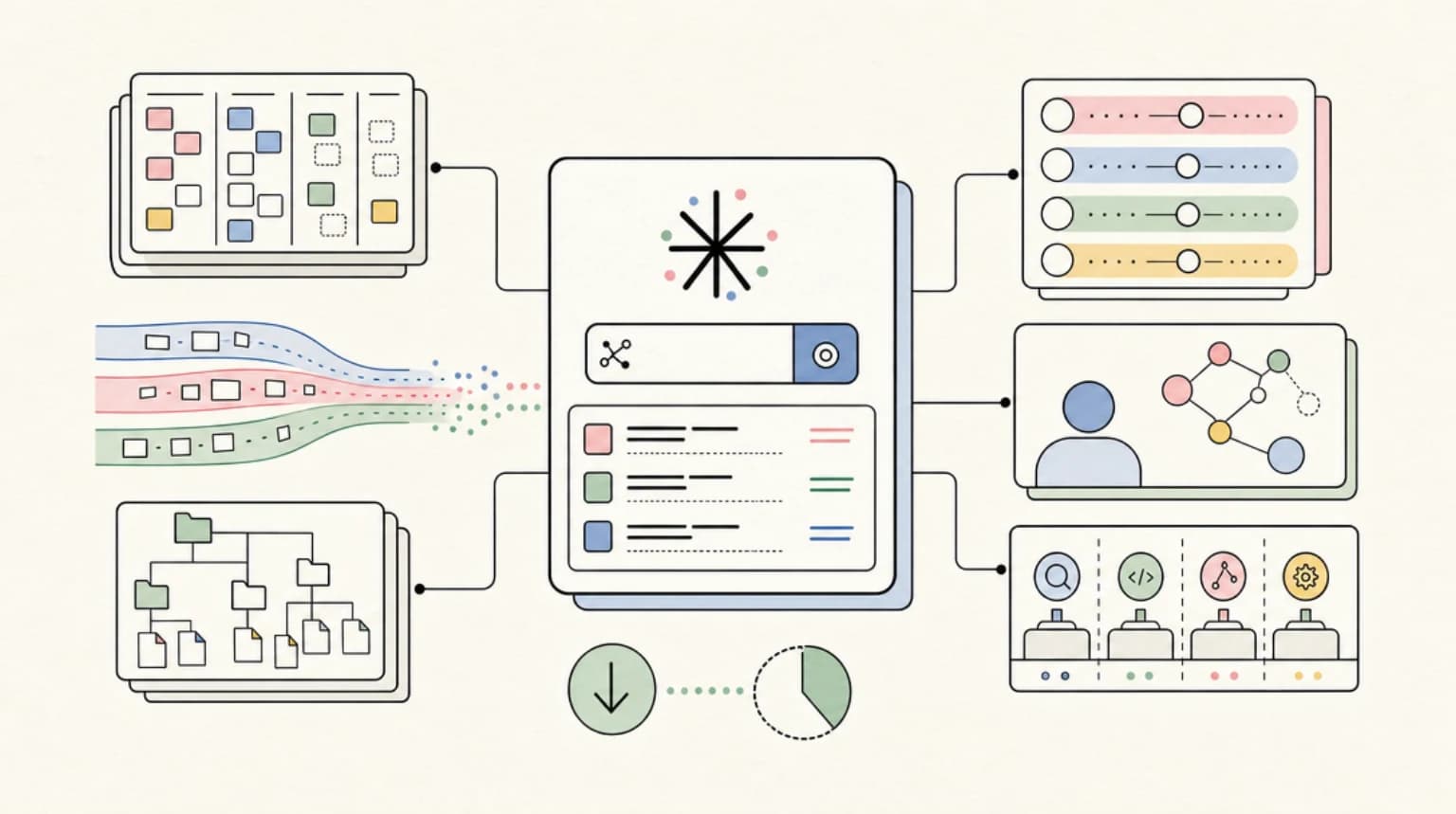
Claude Context is still a semantic code search MCP, but the better question is operational: when does retrieval infrastructure make coding agents better, and when does it become another opaque layer the reviewer has to trust?
As of this refresh, the repo is active on the master branch, was pushed on June 22, 2026, and the public GitHub API reports TypeScript, MIT license, about 11.9k stars, and roughly 890 forks. The npm packages @zilliz/claude-context-mcp and @zilliz/claude-context-core are at 0.1.15. The current README describes Claude Context as an MCP plugin that gives Claude Code and other coding agents semantic code search over an entire codebase.
The product shape matters because code search is becoming part of the agent runtime. We have written about terminal agents needing a portable runtime surface, agent workspaces needing filesystem contracts, and long-running agents needing harnesses. Retrieval belongs in that same stack. It is not just "find files faster." It is how an agent decides what evidence to inspect before changing code.
What Claude Context Does Now
Claude Context runs as an MCP server. You configure it with a vector database and an embedding provider, then expose tools that let an agent index a codebase, search it, check indexing status, and clear an index.
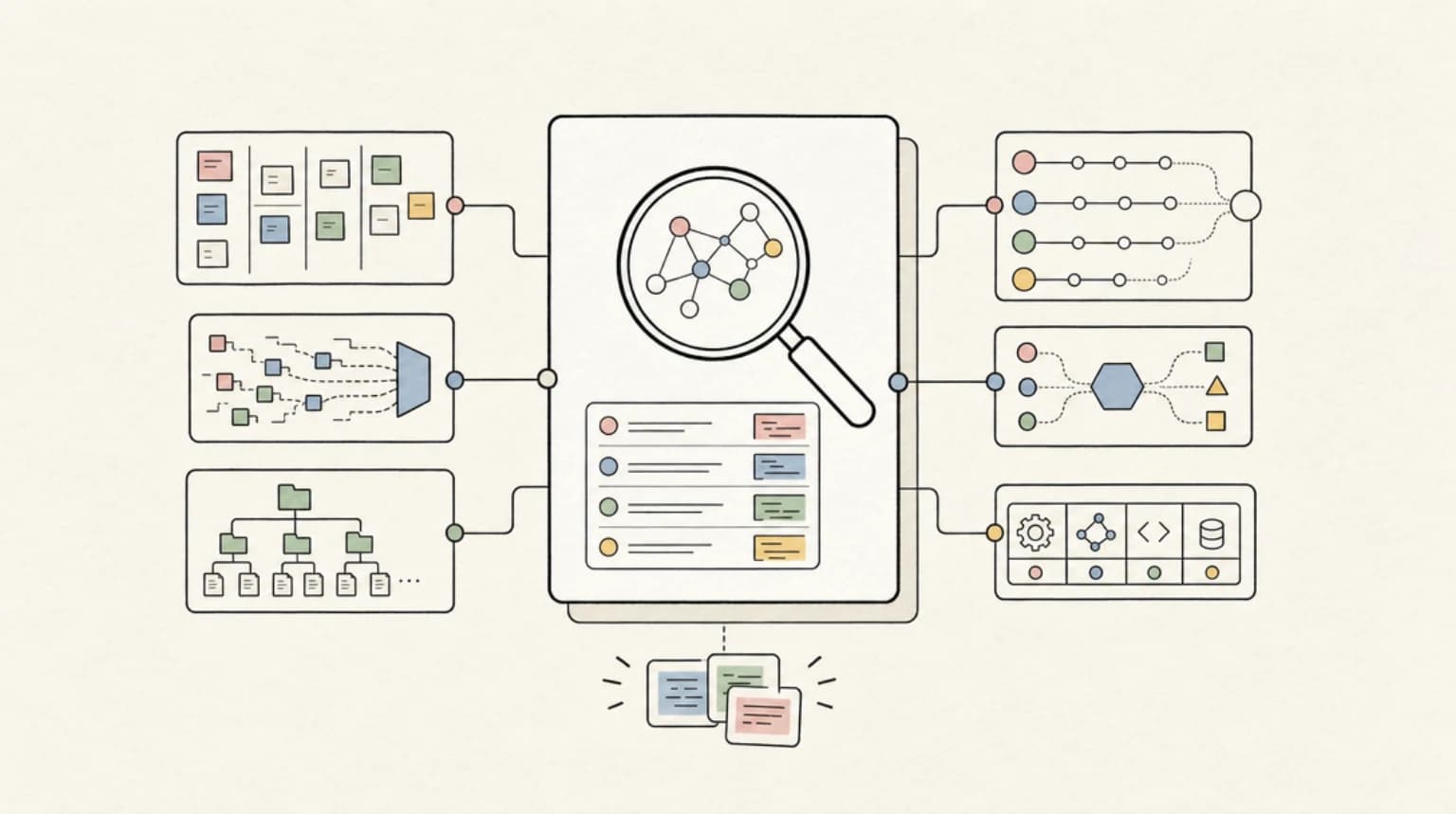
The current docs describe the required pieces:
- Node.js
>=20.0.0 - a vector database, either Zilliz Cloud or local Milvus
- an embedding provider, with docs covering OpenAI, VoyageAI, Gemini, or local Ollama
- the MCP package
@zilliz/claude-context-mcp
The project is no longer just a Claude Code-specific setup snippet. The README includes configuration examples for Claude Code, Codex CLI, Gemini CLI, Qwen Code, Cursor, Void, Claude Desktop, Windsurf, VS Code, Cherry Studio, Trae, Cline, and Augment Code. That is the important ecosystem signal: code retrieval is being packaged as a portable tool, not a single-editor feature.
The package exposes the same basic workflow:
- Start indexing a resolved absolute path.
- Chunk the code and generate embeddings.
- Store chunks in Milvus or Zilliz Cloud.
- Let the agent search with natural language.
- Return relevant snippets instead of loading whole directories.
The async indexing docs add two current details worth knowing. Indexing starts and returns quickly while processing continues in the background, and search_code can work during indexing with partial results. Status is coarse and phase-based, not an exact per-file progress meter.
That is a practical improvement for agent work. A long indexing run should not freeze the entire session. But it also means the agent and reviewer need to know whether a result came from a complete index, a partial index, or a stale snapshot.
Why Semantic Search Helps Agents
Coding agents fail when they modify code without reading the right surrounding context.
Sometimes they know the file name. Often they do not. The task might say "fix billing retries," while the relevant behavior lives across a queue consumer, an API route, a config file, a cron job, and a test helper. Plain keyword search can miss the connection. Dumping a directory into context is expensive and noisy. Manual file selection turns the human into the retrieval system.
Semantic code search is useful because it can turn intent into a candidate evidence set. A query like "where do we retry failed payment events" can surface files that do not share the exact phrasing. Hybrid retrieval helps because code has both meanings and exact identifiers. Dense vectors help with intent. Keyword search helps with function names, file paths, and constants.
That is also why retrieval should produce receipts. If an agent uses Claude Context to change code, the final handoff should say which searches it ran, which files or chunks mattered, and which checks passed. Otherwise the reviewer sees a diff but not the evidence path that led to it.
This is the same argument behind agent swarms needing receipts and local OpenTelemetry traces as agent receipts. A retrieval call is part of the work. It should be inspectable.
Newsletter
Get the weekly deep dive
Tutorials on Claude Code, AI agents, and dev tools, delivered free every week.
From the archive
Introducing agentfs: A Filesystem for AI Agents
Apr 28, 2026 • 9 min read
MCP Lens: Wireshark for Model Context Protocol Servers
Apr 28, 2026 • 8 min read
Promptlock: Deterministic Prompt Versioning for LLM Apps
Apr 28, 2026 • 7 min read
Six More Tools for the Agent Infrastructure Stack
Apr 28, 2026 • 9 min read
The Token-Savings Claim
The older articles leaned on a roughly 40% token reduction claim from the project. That claim is still directionally plausible, but it should not be treated as a universal benchmark.
Retrieval saves tokens when it replaces broad context loading with a small, relevant evidence set. It can waste tokens when it returns too many chunks, stale chunks, duplicate chunks, or plausible but irrelevant code. It can also create a false sense of coverage: the agent may search, retrieve something convincing, and never inspect the file that actually matters.
The useful metric is not "did retrieval reduce tokens?" It is:
- Did the agent find the right code faster?
- Did it avoid loading unrelated directories?
- Did the final diff become easier to review?
- Did the final report cite the files and searches that mattered?
- Did tests or typechecks catch mistakes that retrieval missed?
That last point matters. Retrieval is not verification. It is evidence discovery. Verification still belongs to tests, typechecks, smoke checks, screenshots, route checks, and human review. See agent evals need baseline receipts for the same distinction at the benchmark layer.
The Current Setup Shape
For Claude Code, the README still shows the same broad MCP pattern: add the MCP server with environment variables for the embedding provider and vector database, then let Claude call the tools during a session.
The default OpenAI setup uses an API key and text-embedding-3-small, but the docs also cover VoyageAI's code-focused embeddings, Gemini embeddings, and Ollama for local embeddings. That provider flexibility matters for teams with privacy, cost, or data-residency constraints.
Zilliz Cloud is the easiest vector database path. Local Milvus is the advanced path. The local option is important because some teams will not want code embeddings stored in a managed service, even if only embeddings and chunks are involved.
Two newer operational details are worth calling out.
First, file inclusion and exclusion rules matter. A code index should not ingest secrets, generated artifacts, private uploads, build outputs, or huge vendor directories. The MCP docs include custom extension and ignore-pattern configuration. Treat those patterns as policy, not convenience.
Second, the trigger-file watcher means external tools can request an immediate sync by touching ~/.context/.sync-trigger. The docs show this as useful for Claude Code hooks after edits or writes. That is powerful, but it also connects retrieval to the hook system. If you use it, review it the way you would review other automation. Claude Code hooks explained is the companion layer here.
Where It Fits
Claude Context is a good fit when the codebase is too large for manual file curation but stable enough that indexing is worthwhile.
It is especially useful for:
- onboarding to a large repo
- debugging behavior spread across several modules
- planning refactors where callsites are not obvious
- answering architecture questions before editing
- giving headless agents a way to discover context before making changes
It is less useful for small projects where the relevant files are obvious, or for high-churn generated code where the index is constantly stale. It is also not a substitute for a codebase map, ownership docs, tests, or a careful review process.
If you already run multi-agent workflows, retrieval should be part of the workspace contract. Each agent should know which path was indexed, whether it used a partial or complete index, and how retrieved files map to the branch it edited. That connects directly to parallel coding agents needing merge discipline and how to coordinate multiple AI agents.
The Opposing View
There is a serious skeptical case against semantic code search for agents.
First, code is not prose. Exact identifiers, types, imports, call graphs, and control flow matter. A vector match can feel semantically close while missing the one file that enforces the invariant.
Second, retrieval can hide uncertainty. If the agent receives five plausible chunks, it may act as if the whole codebase was searched thoroughly. A reviewer may not know whether the index excluded generated files, tests, migrations, or private packages.
Third, vector infrastructure adds failure modes: embedding provider outages, rate limits, stale collections, path-hash confusion, local snapshot drift, and vector DB credentials. The current Claude Context docs are honest about some of this by documenting status states, partial indexing, path identity, and stale snapshot behavior.
The right conclusion is not "skip retrieval." It is "treat retrieval as infrastructure." Put it behind ownership, config review, status checks, and final receipts.
That is the same governance pattern as MCP server debugging with MCP Lens and best MCP servers in 2026. MCP servers are tools with state, credentials, and failure modes. They deserve the same operational attention as any other tool in the agent loop.
The Take
Claude Context is useful because it moves code discovery out of the human's clipboard and into an agent-callable tool. That is the right direction for large repositories.
But semantic search is not magic context. It is retrieval infrastructure. It needs clean inclusion rules, fresh indexes, understandable status, provider choices, security boundaries, and reviewable search receipts.
The teams that get the most out of it will not be the ones that install it and trust every result. They will be the ones that ask the agent to show its evidence path before they accept the diff.
FAQ
What is Claude Context?
Claude Context is an MCP server and TypeScript package from Zilliz that lets AI coding agents index and semantically search a codebase.
Is Claude Context only for Claude Code?
No. The README includes setup examples for Claude Code, Codex CLI, Gemini CLI, Cursor, Windsurf, VS Code, Claude Desktop, Cline, and other MCP clients.
What services does Claude Context require?
It needs Node.js 20 or newer, an embedding provider such as OpenAI, VoyageAI, Gemini, or Ollama, and a vector database such as Zilliz Cloud or local Milvus.
Does semantic code search replace tests?
No. It helps the agent find relevant code. Tests, typechecks, smoke checks, and human review still verify whether the change is correct.
What is the biggest risk?
The biggest risk is trusting retrieved snippets without knowing index freshness, inclusion rules, search queries, and omitted files. Retrieval needs receipts.
When should a team skip it?
Skip it for small codebases, obvious one-file tasks, or workflows where code embeddings and chunks cannot leave a controlled environment and local Milvus/Ollama are not acceptable.
Sources
- zilliztech/claude-context GitHub repository
- Claude Context README
- Claude Context MCP package README
- Claude Context prerequisites
- Claude Context async indexing workflow
- npm registry: @zilliz/claude-context-mcp
- npm registry: @zilliz/claude-context-core
- Claude Code MCP docs
- Model Context Protocol documentation
Read next
Git Worktrees + Claude Code: The 2026 Playbook for Running Parallel Agents Without Context Switching
Running multiple Claude Code agents on the same repo causes branch collisions and stash chaos - git worktrees fix this by giving each agent its own isolated directory while sharing one Git history.
7 min readClaude Code 2.1.128 Is an Ops Release, Not a Feature Drop
Claude Code 2.1.128 is full of small fixes around MCP, worktrees, OTEL, plugins, and permissions. That is exactly why it matters for teams running agents every day.
6 min readWhy Skills Beat Prompts for Coding Agents in 2026
The coding-agent workflow is maturing past giant hand-written prompts. The winning pattern in 2026 is a control stack: project rules, reusable skills, bounded sub-agents, and deterministic tools around the model.
9 min readShare
Suggest an editSave
Developers Digest
Technical content at the intersection of AI and development. Building with AI agents, Claude Code, and modern dev tools - then showing you exactly how it works.
300+ videos30K+ GitHub stars50+ articles
Related Tools
AI Coding

Augment Code
AI coding platform built for large, complex codebases. Context Engine indexes 500K+ files across repos with 100ms retrie...
View ToolAI CodingDaily Driver
Claude Code
Anthropic's agentic coding CLI. Runs in your terminal, edits files autonomously, spawns sub-agents, and maintains memory...
View ToolAI Coding

Sourcegraph Cody
AI coding assistant with deep codebase context. Indexes your entire repo graph for accurate answers. VS Code and JetBrai...
View ToolAI Coding
Kimi Code
Open-source terminal coding agent from Moonshot AI. Powered by Kimi K2.5 (1T params, 32B active). 256K context window. A...
View ToolApps from Developers Digest
Developer ToolsIn Progress
ctx-peek
Inspect Claude Code transcripts to see which files, tools, and tokens are filling the context window.
View AppDeveloper Tools
Agent Hub
Every coding agent in one window. Stop alt-tabbing between Claude, Codex, and Cursor.
View AppDeveloper ToolsIn Progress
Skill Builder
Turn a one-liner into a working Claude Code skill. From idea to installed in a minute.
View AppRelated Guides
Guide
MCP Tool Search - Claude Code
Deferred tool loading reduces context overhead for large MCP suites.
Claude CodeGuide
Subagent MCP Scoping - Claude Code
Route specific MCP servers only to specific subagents.
Claude CodeGuide
Subagent Context Isolation - Claude Code
Prevent bloating the main conversation with research or exploration.
Claude CodeRelated Videos
Self Improving Applications with Claude Code & Codex
Build a Self‑Improving Next.js App: Supabase + Vercel Eve + GitHub Issues + Agent Loops Check out Supabase: https://supabase.plug.dev/1wWOTGS The video demonstrates how to build and deploy a self-im...
Video·

Open Design: Turn Websites into Design Assets for Cursor & Claude Code
Open Design: Open-Source n8n App That Turns Any Website into a Brand Kit, Design System, HTML + Images The video introduces Open Design, an MIT-licensed full-stack template that combines AI and n8n a...
Video·
Nimbalyst: The Open-Source Visual Workspace for Building with Codex and Claude Code
Nimbalyst Demo: A Visual Workspace for Codex + Claude Code with Kanban, Plans, and AI Commits Try it: https://nimbalyst.com/ Star Repo Here: https://github.com/Nimbalyst/nimbalyst This video demos N...
Video·
Related Posts
8 min read
GitHub Copilot
GitHub Copilot Agent Finder: What ARD Means for Third-Party AI Tools in 2026
GitHub's Agent Finder discovers and invokes Claude, Codex, MCP servers, and skills automatically. Here is how the new AR...

6 min read
Claude Code
Claude Code 2.1.128 Is an Ops Release, Not a Feature Drop
Claude Code 2.1.128 is full of small fixes around MCP, worktrees, OTEL, plugins, and permissions. That is exactly why it...

9 min read
AI Coding
10 Trending AI Dev Tools, Week of April 28 2026
From Claude Opus 4.7 and GPT-5.5 to Andrej-karpathy-skills and EvoMap - the AI dev tools actually shipping the last 30 d...

11 min read
AI Coding
What Hacker News Gets Right About AI Coding Agents in 2026
Hacker News keeps arguing about Claude Code, Codex, skills, MCP, and orchestration. Under the noise, the same four truth...

9 min read
AI Coding
Why Skills Beat Prompts for Coding Agents in 2026
The coding-agent workflow is maturing past giant hand-written prompts. The winning pattern in 2026 is a control stack: p...
8 min read
Claude Code
Claude Code Channels: Telegram, Discord, iMessage, and Webhooks
Claude Code Channels let Telegram, Discord, iMessage, fakechat, and custom webhooks push events into a running Claude Co...
Build with the member tools
Get Smarter About AI Dev
New tutorials, open-source projects, and deep dives on coding agents - delivered weekly.
One email per weekReal code, not theoryFree forever