Image Token Compression Is a Real Agent Cost Lever
TL;DR
A Show HN project claims large agent-cost cuts by rendering bulky context as images. The useful lesson is not the trick itself. It is that compression needs evals, byte-safety rules, and per-request accounting.
Last updated: July 4, 2026
The most interesting AI cost story on Hacker News this week was not another model price cut. It was a weird compression trick.
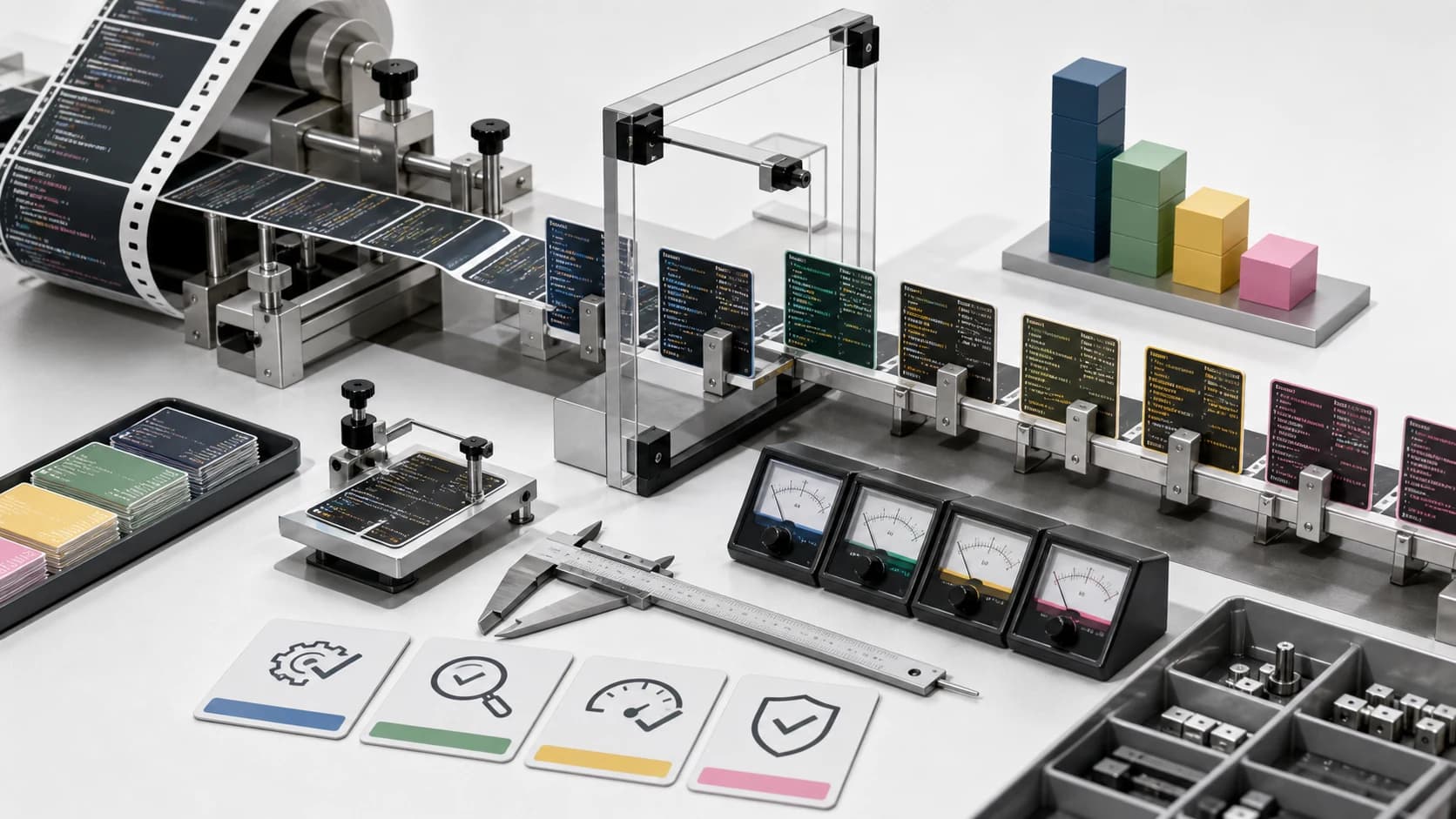
pxpipe is a local proxy that renders bulky agent context as images before sending it to supported models. The project claims this can cut end-to-end Claude Code-style bills by roughly 59-70 percent on token-dense workloads, with a much smaller vision-token footprint for large system prompts, tool docs, command output, and older history.
That sounds like a hack. It is a hack. It is also pointing at a real infrastructure layer.
We already track Claude Code token burn, agent product-market-fit cost control, and Codex CLI resource budgets. The pxpipe thread adds a sharper question: when agent context becomes the biggest line item, should teams optimize the representation of context as aggressively as they optimize model choice?
My take: image-token compression is not something I would blindly put in front of production agents. It is lossy. It can silently misread exact identifiers. It depends on model vision behavior, pricing, prompt caching, and workload shape. But the pattern is worth studying because it forces agent teams to build the measurement layer they should have had anyway.
The Signal
The Hacker News item, "60% Fable cost cut by converting code to images and having the model OCR it", had 235 points and 87 comments when checked during this run. The linked repository was not just a tweet-sized trick. It includes a proxy, dashboard, token accounting, model allowlists, eval directories, and a long limitations section.
The official project claim is narrow enough to be useful:
- It compresses selected input blocks, not model output.
- It leaves recent turns as text.
- It uses a profitability gate so sparse prose can stay text.
- It logs counterfactual token accounting to
~/.pxpipe/events.jsonl. - It explicitly says the method is lossy.
- It warns that exact strings, IDs, hashes, secrets, and other byte-exact values must stay text.
That last point is the whole story.
If you compress context into images, you are no longer sending plain text context. You are asking the model to read a rendered artifact. For many tasks, gist is enough. For some tasks, gist is dangerous.
Why This Works At All
The cost gap exists because text tokens and image tokens are priced and counted differently.
In a coding-agent session, large chunks of context are often token-dense: tool schemas, JSON, stack traces, long command output, generated diffs, old chat turns, and documentation excerpts. A rendered page can pack a lot of characters into a fixed-size image. If the model can recover enough of the content from vision, the image can be cheaper than equivalent text.
This is not the same as ordinary summarization. A summary throws information away intentionally. Image compression preserves the visual form of the original content but makes access probabilistic. The model may read it correctly. It may read the gist. It may misread a character that matters.
That makes it closer to a codec than a prompt trick.
And like every codec, it needs a loss model.
Where I Would Use It
The safest use case is bulky, low-precision context where the agent needs orientation more than byte-perfect recall.
Good candidates:
- old chat turns where the agent needs the project narrative
- long logs where the agent is scanning for patterns
- repeated tool docs after the active part of the task is already clear
- large prose documentation blocks
- historical command output that can be re-run or re-read
- broad codebase context before the agent opens exact files
Bad candidates:
- API keys, secrets, tokens, and credentials
- commit SHAs, hashes, IDs, invoice numbers, migrations, and exact paths
- security findings where one character changes the result
- generated code that will be copied without reopening the source file
- legal, medical, or financial text where exact wording matters
- tool schemas where a misspelled field changes the call
This is the same boundary we use in context engineering: compressed context can guide attention, but source-of-truth context must remain recoverable.
Newsletter
Get the weekly deep dive
Tutorials on Claude Code, AI agents, and dev tools, delivered free every week.
From the archive
Jamesob's Guide to Running SOTA LLMs Locally: The Hardware and Config That Actually Works
Jul 4, 2026 • 9 min read
Leanstral 1.5: Mistral's Open Theorem-Proving Model Hits 100% on miniF2F
Jul 4, 2026 • 8 min read
Agent Studio: Authoring the Roles, Not Just the Knowledge
Jul 3, 2026 • 9 min read
App Builder: From a Prompt to a Working App You Can Watch Run
Jul 3, 2026 • 8 min read
The Byte-Safety Rule
The rule I would use is simple:
If the agent will act on a value as an exact value, keep that value in text.
That includes file paths, function names, user IDs, account IDs, SHA hashes, environment variable names, CLI flags, package versions, port numbers, endpoint paths, and short identifiers. The pxpipe README says exact 12-character hex strings in dense imaged content were unreliable in its tests, including silent wrong answers for some model paths. That is the failure mode to design around.
A useful agent harness should split context into three lanes:
| Lane | Representation | Example |
|---|---|---|
| Exact | Text | current task, file paths, identifiers, diffs, tool schemas |
| Recoverable | Text plus source pointer | old logs, file excerpts, docs chunks |
| Compressible | Image or summary | stale chat history, repeated docs, bulky low-risk output |
The mistake is treating all context as equally compressible because it is all "just tokens." It is not. Context has different precision requirements.
Evals Matter More Than The Trick
The best part of the pxpipe repository is not the proxy. It is the fact that the project tries to measure the failure surface.
The README points to SWE-bench runs, needle-in-haystack tests, gist recall tests, state tracking tests, and legibility audits. I would still treat those as project-provided evidence, not independent proof. But this is the right shape of evidence. A compression system should be judged by task outcomes, exact-string recall, error type, run-to-run variance, latency, and real billing deltas.
That matches the argument in agent evals need baseline receipts: an eval without the baseline, candidate, fixture, cost, and review note is not an eval. It is a vibe check.
For image-token compression, the minimum eval harness should record:
- original request body
- compressed request body
- model and version
- token counterfactual
- actual billed usage
- task result
- exact-string recall checks
- whether the agent re-opened source files before editing
- latency added by rendering
- whether prompt caching still behaved as expected
- human review verdict for any behavioral split
Do not only measure savings. Measure the mistakes savings bought you.
The Prompt Caching Question
Compression also interacts with prompt caching.
If your expensive context is stable and cacheable, ordinary prompt caching may already make it cheap enough. If your context churns every turn, rendering can look more attractive. If image blocks disrupt provider-specific caching behavior, the savings can disappear. The right answer is provider-specific and workload-specific.
This is why I like pxpipe's per-request accounting direction. The decision should not be global. A proxy should decide at the block level:
- Is this block dense enough to win?
- Is it stale enough to compress?
- Is it safe to read approximately?
- Is it cacheable as text?
- Is this model good at reading this render format?
- Can the agent recover the exact source if needed?
That is a runtime policy problem, not a blog-post benchmark problem.
The Opposing View Is Right Too
There is a fair skeptical reaction: if you need to turn text into images so the model can OCR it back into text, something is wrong with the pricing and context model.
I agree with that. This is not an elegant long-term interface.
In a cleaner world, model providers would expose cheaper archival context lanes, structured cache primitives, lossy-memory annotations, source-linked retrieval, and explicit precision contracts. Developers would not need to smuggle text through pixels.
But engineering teams do not get to wait for clean abstractions. They get invoices now.
So the practical question is not "is this beautiful?" It is "can we make compression explicit, measurable, reversible, and safe enough for the narrow cases where it pays?"
What I Would Build Instead Of A Blind Proxy
If I were putting this idea into a production coding-agent stack, I would not start with transparent compression for everything.
I would build a context budgeter:
- Keep the active turn, current files, exact identifiers, and tool schemas in text.
- Store bulky old context as source-linked artifacts.
- Compress only blocks that pass density, freshness, and precision checks.
- Attach a text manifest describing what each image contains.
- Force source re-open before edits, shell commands, security claims, and exact citations.
- Run a shadow counterfactual for cost and outcome comparison.
- Give users a kill switch and an audit log.
That turns the idea from "OCR your prompt to save money" into a serious agent runtime feature.
It also composes with model routing. Some models may read dense context images well. Others may fail in ways that are hard to detect. A router should know that and only apply compression where the model has earned it.
SEO Signal And Duplicate Risk
This topic is not a duplicate of the existing Claude Code pricing posts. The existing coverage focuses on token burn, cache observability, pricing, and resource budgets. This one is specifically about representation-level compression: changing how context is encoded before the model sees it.
Google Trends did not provide reliable per-query rows in this environment during the run. pytrends was not installed locally, and the Trends RSS endpoint returned a 404 HTML response rather than usable developer-topic rows. I used Trends only for query framing and fell back to HN velocity, GitHub source quality, existing DD coverage, and durable search intent around AI agent costs, Claude Code costs, context compression, and prompt caching.
The Takeaway
Image-token compression is not a free lunch. It is lossy context compression with a surprisingly good economic shape for some agent workloads.
That makes it neither a gimmick to dismiss nor a default to enable everywhere.
The useful lesson is broader: agent teams need a context accounting layer. Not just token totals. Precision classes, source pointers, cache behavior, exact-value guards, model-specific read tests, and outcome receipts.
Once you have that, image compression becomes one policy option among many.
Without that, it is just a clever way to buy cheaper mistakes.
FAQ
What is image-token compression for AI agents?
Image-token compression renders selected text context as images so a vision-capable model can read the content using image tokens instead of ordinary text tokens. It can reduce input cost on token-dense workloads, but it is lossy and model-dependent.
Is pxpipe safe to use with Claude Code?
It should be treated as experimental. The project documents real limitations, including unreliable exact-string recall from dense images. Do not use image compression for secrets, hashes, IDs, exact paths, or any value the agent must reproduce byte-for-byte.
Does image compression replace prompt caching?
No. Prompt caching and image compression solve different problems. Prompt caching reduces repeated stable text cost. Image compression changes the representation of selected context. A production harness should measure both and choose per request.
What is the best use case for image-token compression?
The best fit is bulky, low-precision, token-dense context: stale chat history, repeated docs, long logs, and large tool output that the agent can use for orientation while reopening exact source files before acting.
How should teams evaluate context compression?
Compare compressed and uncompressed runs on the same task fixtures. Track billed usage, token counterfactuals, latency, exact-string recall, task success, human review verdicts, and whether the agent recovered source truth before edits.
Sources
- GitHub: teamchong/pxpipe, checked July 4, 2026.
- Hacker News: 60% Fable cost cut by converting code to images and having the model OCR it, checked July 4, 2026.
- Anthropic docs: Prompt caching, referenced for the caching tradeoff.
- OpenAI docs: Prompt caching, referenced for provider-specific caching behavior.
- Developers Digest: Claude Code token burn and cache observability, Codex CLI resource budgets, and agent evals need baseline receipts.
Read next
Claude Code Token Burn Is an Observability Problem
The latest Claude Code cache-burn debate is not just a quota complaint. It is a reminder that coding agents need cache-hit telemetry, spend ceilings, and repro-grade usage logs.
8 min readAI Agent PMF Is a Cost Control Problem Now
AI coding agents have crossed from demo to daily workflow. The next bottleneck is not demand. It is cost attribution, budget gates, and workflow design that keeps agent fleets from turning useful work into surprise spend.
8 min readCodex CLI Needs Resource Budgets, Not Just Token Budgets
A trending Codex SQLite WAL bug is a useful warning for every local coding agent: logs, disks, background processes, and telemetry paths need budgets too.
8 min readShare
Suggest an editSave
Developers Digest
Technical content at the intersection of AI and development. Building with AI agents, Claude Code, and modern dev tools - then showing you exactly how it works.
300+ videos30K+ GitHub stars50+ articles
Try These Tools
Related Tools
Productivity

Codeburn
Interactive TUI dashboard that shows exactly where your Claude Code and Cursor tokens are going, in real time.
View ToolAI CodingDaily Driver
Claude Code
Anthropic's agentic coding CLI. Runs in your terminal, edits files autonomously, spawns sub-agents, and maintains memory...
View ToolAI Coding
Kimi Code
Open-source terminal coding agent from Moonshot AI. Powered by Kimi K2.5 (1T params, 32B active). 256K context window. A...
View ToolAI Models

Claude Opus 4.7
Anthropic's flagship reasoning model. Best-in-class for coding, long-context analysis, and agentic workflows. 1M token c...
View ToolApps from Developers Digest
Developer ToolsIn Progress
Agent Benchmark Lab
Compare AI coding agents on reproducible tasks with scored, shareable runs.
View AppDeveloper Tools
Agent Hub
Every coding agent in one window. Stop alt-tabbing between Claude, Codex, and Cursor.
View AppDeveloper ToolsIn Progress
Skill Builder
Turn a one-liner into a working Claude Code skill. From idea to installed in a minute.
View AppRelated Guides
Guide
Fast Mode - Claude Code
2.5x faster Opus at a higher token cost (research preview).
Claude CodeGuide
Interactive Mode - Claude Code
Real-time prompt loop with history, completions, and multiline input.
Claude CodeGuide
Claude Code Setup Guide
Configure Claude Code for maximum productivity -- CLAUDE.md, sub-agents, MCP servers, and autonomous workflows.
AI AgentsRelated Videos
Zed: The Open Source Agentic IDE - Use Claude Code, Codex & Gemini CLI in one place
Check out Zed here! https://zed.dev In this video, we dive into Zed, a robust open source code editor that has recently introduced the Agent Client Protocol. This new open standard allows...
Video·
Claude Code NEW Sub Agents in 7 Minutes
Leveraging Anthropic's Subagent for Claude Code: A Step-by-Step Guide In this video, we explore Anthropic's newly released subagent feature for Cloud Code, which allows developers to create...
Video·
Related Posts
8 min read
Claude Code
Claude Code Token Burn Is an Observability Problem
The latest Claude Code cache-burn debate is not just a quota complaint. It is a reminder that coding agents need cache-h...

8 min read
AI Agents
AI Agent PMF Is a Cost Control Problem Now
AI coding agents have crossed from demo to daily workflow. The next bottleneck is not demand. It is cost attribution, bu...
8 min read
Codex
Codex CLI Needs Resource Budgets, Not Just Token Budgets
A trending Codex SQLite WAL bug is a useful warning for every local coding agent: logs, disks, background processes, and...

8 min read
AI Agents
Agent Evals Need Baseline Receipts
Hex's data-agent lab shows the practical eval pattern AI teams should copy: compare candidates against stable baselines,...

14 min read
Context Engineering
Context Engineering: The Highest-Leverage Skill in AI-Assisted Development
Context engineering is the practice of designing the persistent information that surrounds every AI interaction. CLAUDE....

7 min read
Claude Code
Claude Agent SDK Credits End the Subscription Arbitrage
Anthropic's June 15 Agent SDK credit split is not just a pricing tweak. It is a signal that autonomous coding workflows...
Build with the member tools
Get Smarter About AI Dev
New tutorials, open-source projects, and deep dives on coding agents - delivered weekly.
One email per weekReal code, not theoryFree forever