Codex Gets Computer Use in the EU - and a Clean Claude Code Import
TL;DR
OpenAI's mid-June 2026 Codex drop brings Computer Use to the EEA, UK, and Switzerland and adds selective Claude Code imports plus managed Bedrock auth to the CLI. Here is what actually shipped, verified against the changelog.
Last updated: June 24, 2026
OpenAI shipped two Codex updates in the same week of June 2026, and together they tell you where the agentic coding tool is heading: out of the terminal and onto the desktop, and explicitly onto the turf of competing CLIs. On June 16 the Codex app gained Computer Use in the EEA, UK, and Switzerland. The day before, Codex CLI 0.140.0 added a way to import your Claude Code setup. Neither is a new model. Both are about reach.
This post sticks to what shipped, with claims checked against OpenAI's Codex changelog, CLI docs, import guide, and slash-command reference.
Official Sources
| Resource | Link |
|---|---|
| Codex changelog | OpenAI Developers |
| Codex CLI docs | OpenAI Developers |
| Codex import guide | OpenAI Developers |
| Codex slash commands | OpenAI Developers |
Computer Use lands in Europe
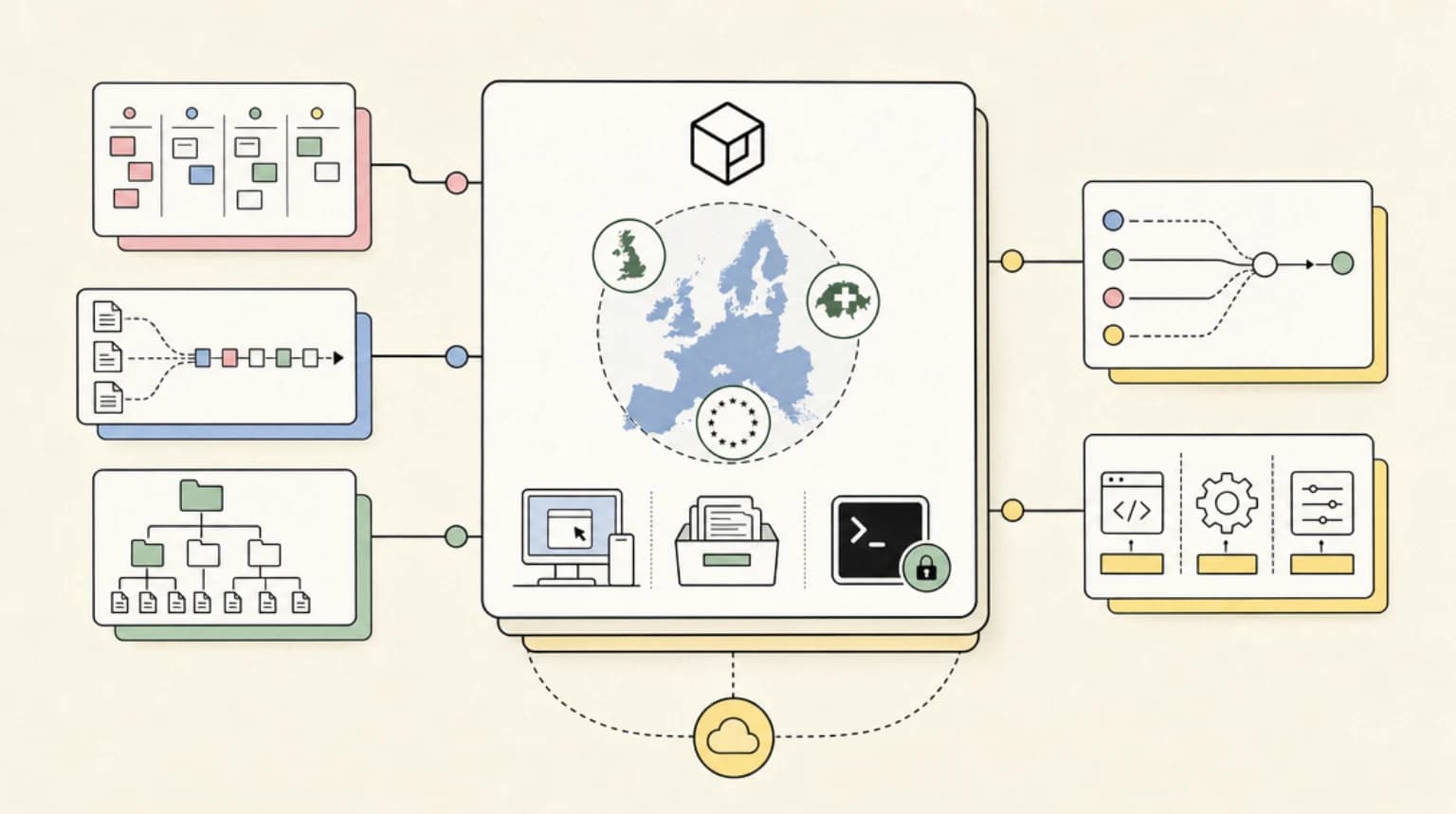
The headline for June 16 is regional availability. OpenAI's Codex changelog says Computer Use became available on macOS and Windows in the EEA, UK, and Switzerland, giving Codex the ability to operate desktop apps by seeing, clicking, and typing.
That matters because it moves Codex from a terminal-only loop into the same practical category as computer-use workflows, browser QA for agents, and long-running development work where the agent needs to inspect the result rather than only edit files.
Three more app features landed in the same regions on the same date:
- A Codex Chrome extension for browser tasks, able to operate across tabs.
- Memories, which "can remember useful preferences." The changelog notes Memories are "off by default" in these regions - a privacy-conscious default that matches the European regulatory context.
- Chronicle, available "as an opt-in research preview" for ChatGPT Pro subscribers on macOS.
The pattern is consistent: desktop control, browser control, and persistent context, all gated behind opt-in toggles. If you build for European users or work inside an EU org that blocked Codex on availability grounds, this is the update that changes your options.
The Claude Code import is the quiet story
The more interesting line for working developers shipped a day earlier, in Codex CLI 0.140.0 on June 15. The changelog describes a new /import command for selectively importing setup, project configuration, and recent chats from Claude Code.
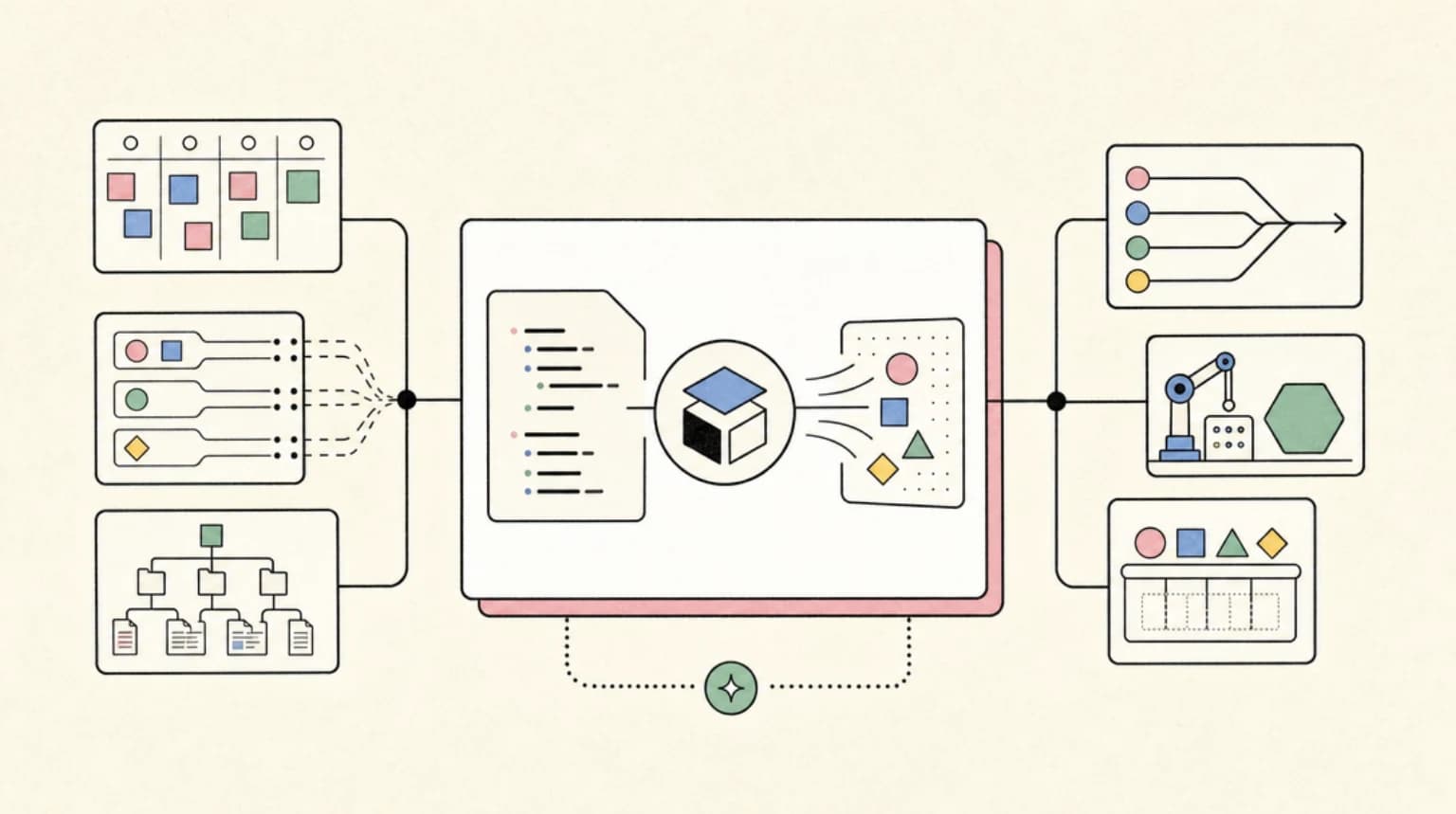
The word that matters is selectively. This is not a one-shot "convert my whole config" button. OpenAI's import guide now gives the feature its own page, which is the stronger signal: migration is not a footnote anymore. It is a product surface.
That is the honest way to migrate. Most of a Claude Code setup is portable. Some of it is tool-specific. A blanket import would drag the latter along. For anyone running both tools - a common setup in 2026, given how many teams keep more than one agentic CLI installed - this lowers the switching cost without pretending the two tools are identical.
It also connects directly to the comparison work in Codex vs Claude Code in June 2026, Claude Code vs Codex app, and Codex custom model providers. The question is no longer whether teams will use one agent. The question is how much of their setup can survive moving between them.
It also signals intent. OpenAI is not waiting for users to manually rebuild their workflow in Codex; it is meeting them where their config already lives.
Newsletter
Get the weekly deep dive
Tutorials on Claude Code, AI agents, and dev tools, delivered free every week.
From the archive
'The Orchestration Is the Product': What Perplexity's Aravind Srinivas Sees That the Model Labs Don't
Jun 17, 2026 • 11 min read
RFC 10008: The New HTTP QUERY Method Explained
Jun 17, 2026 • 6 min read
Self-Hosting Open-Weights Models: The Real Break-Even Math
Jun 17, 2026 • 11 min read
Vercel eve: The Framework for Building AI Agents
Jun 17, 2026 • 9 min read
The rest of 0.140.0
The same release rounded out the CLI with several quality-of-life and enterprise items:
/usageviews for "daily, weekly, and cumulative account token activity." Token visibility inside the CLI is a recurring ask, and it lands here.- Managed Amazon Bedrock API-key authentication with "encrypted local storage" - the kind of line that matters to AWS-centric teams running Codex against Bedrock-hosted models.
- A unified
@mentions menu: "Typing @ now opens the unified mentions menu for files, plugins, and skills by default." - Permanent session deletion through
codex deleteand/delete, shipped "with confirmation safeguards."
None of these is flashy on its own. Stacked together, they are the maintenance work of a tool that expects to be used daily in production, not demoed once.
The /usage line pairs with Codex CLI resource budgets. The Bedrock line pairs with Codex custom model providers. The delete command pairs with permissions, logs, and rollback for AI coding agents. These are not separate stories. They are pieces of the same shift from "agent as chat" to "agent as operated tool."
What this is - and what it is not
It is worth being precise about scope, because mid-cycle changelog drops get over-read.
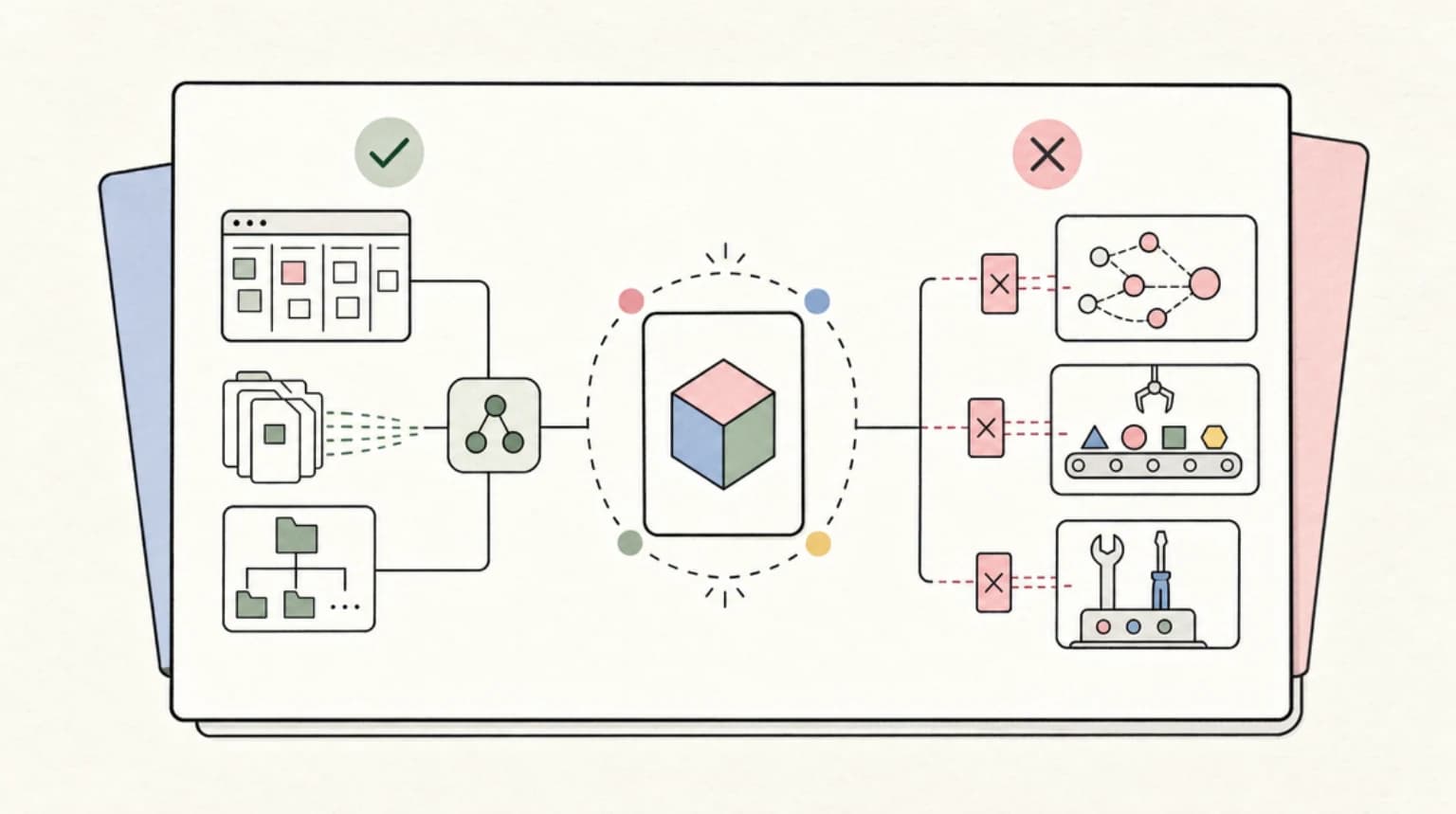
This is not a new Codex model, and nothing here changes coding quality or benchmark numbers. The June 15-16 updates are availability and tooling: a desktop and browser capability reaching new regions, plus CLI ergonomics and an import path. The Computer Use, Chrome extension, Memories, and Chronicle items are the app's existing features arriving in the EEA, UK, and Switzerland, not brand-new functionality - which is exactly why the changelog frames them as "available in these regions."
If you were waiting on Computer Use in Europe, this unblocks you. If you run Codex and Claude Code side by side, /import is the practical win. And if you manage an AWS estate, the managed Bedrock auth line is the one to flag to your platform team.
The opposing view is also fair: regional availability and import commands do not prove that Codex is better than Claude Code, Cursor, or Copilot. They only prove OpenAI is widening the surface area. Teams still need to evaluate the day-to-day loop: prompt cost, context behavior, file editing, review receipts, rollback, and whether the agent can explain what it changed.
The takeaway
The interesting move in this drop is not any single feature - it is the direction. Codex is pushing into the desktop and browser, expanding into regulated markets with privacy-first defaults, and actively lowering the cost of moving over from a competing CLI. For a tool that started as a terminal agent, that is a deliberate widening of the surface area.
For deeper background on the tool itself, see our OpenAI Codex guide. For the broader CLI comparison, Codex vs Claude Code in June 2026 covers how the two ecosystems differ in practice. For the longer operator pattern, read Codex automations for recurring engineering work.
FAQ
Did OpenAI release a new Codex model in this update?
No. This was an availability and tooling update, not a model release. The important changes were Computer Use availability in the EEA, UK, and Switzerland, plus CLI workflow improvements such as /import, /usage, and deletion commands.
What does Codex Computer Use do?
OpenAI describes Computer Use as a Codex capability for operating desktop apps by seeing, clicking, and typing. In this update, the notable change was regional availability for macOS and Windows in the EEA, UK, and Switzerland.
What does the Codex /import command import from Claude Code?
OpenAI's Codex changelog says /import can selectively import setup, project configuration, and recent chats from Claude Code. The useful word is selectively: teams should still review what crosses over instead of treating the import as a perfect conversion.
Why does the Codex Chrome extension matter?
The Chrome extension matters because it expands Codex from terminal and file work into browser tasks across tabs. For developers, that turns more frontend QA, documentation, dashboard, and app-verification work into something the agent can inspect directly.
Should European teams enable Codex Memories by default?
Not automatically. The changelog says Memories are off by default in the EEA, UK, and Switzerland. Treat that as a signal to review privacy, data-retention, and workspace policy before enabling persistent preferences for a team.
How should teams evaluate this Codex update?
Evaluate it as workflow expansion, not model quality. Test whether Computer Use, browser tasks, imports, token usage views, Bedrock auth, and deletion controls make the agent easier to operate safely inside your existing repo and review process.
Sources
Read next
Codex vs Claude Code in June 2026: The Fable 5 Era Rematch
Anthropic shipped Fable 5 and a June 22 subscription cliff. OpenAI shipped GPT-5.5 inside Codex plus automations, browser use, and computer control. Here is the honest June 2026 update on which tool fits which developer.
9 min readOmnigent: Databricks' Meta-Harness for Orchestrating Claude Code, Codex, and Custom Agents
Databricks open-sourced Omnigent, a meta-harness that sits above individual agent CLIs so your sessions, policies, and skills are not locked inside any single tool. Here is what it does, how to install it, and where it fits if you already run Claude Code and Codex.
8 min readCodex in June 2026: What Changed Since the Spring Wave
The Codex changelog from April through June 2026 covers GPT-5.5, Goal mode going stable, Sites, a Chrome extension, Amazon Bedrock support, and mobile access from iOS. Here is what actually shipped and what it means in practice.
9 min readShare
Suggest an editSave
Developers Digest
Technical content at the intersection of AI and development. Building with AI agents, Claude Code, and modern dev tools - then showing you exactly how it works.
300+ videos30K+ GitHub stars50+ articles
Related Tools
ProductivityNew
A
AgentCanvas
A hosted infinite canvas your headless AI agents drive over MCP. Any MCP-speaking agent - Claude Code, Codex, Cursor, or...
View ToolAI CodingAgent
OpenAI Codex
OpenAI's coding agent for terminal, cloud, IDE, GitHub, Slack, and Linear workflows. Reads repos, edits files, runs comm...
View ToolAI Models
ChatGPT
OpenAI's flagship. GPT-4o for general use, o3 for reasoning, Codex for coding. 300M+ weekly users. Tasks, agents, web br...
View ToolAI Coding
Codex CLI
OpenAI's open-source terminal coding agent built in Rust. Runs locally, reads your repo, edits files, and executes comma...
View ToolApps from Developers Digest
Developer Tools
Agent Hub
Every coding agent in one window. Stop alt-tabbing between Claude, Codex, and Cursor.
View AppDeveloper ToolsIn Progress
Skill Builder
Turn a one-liner into a working Claude Code skill. From idea to installed in a minute.
View AppDeveloper ToolsIn Progress
Migrate
Beat the August 2026 Assistants API sunset. Paste old code, get Responses API.
View AppRelated Guides
Guide
Claude Code Setup Guide
Configure Claude Code for maximum productivity -- CLAUDE.md, sub-agents, MCP servers, and autonomous workflows.
AI AgentsGuide
AI Agent Frameworks Compared: LangGraph vs CrewAI vs Mastra vs CopilotKit
Deep comparison of the top AI agent frameworks - LangGraph, CrewAI, Mastra, CopilotKit, AutoGen, and Claude Code.
AI AgentsGuide
Chronicle Research Preview Setup Guide
Set up Codex Chronicle on macOS, manage permissions, and understand privacy, security, and troubleshooting.
Getting StartedRelated Videos
Self Improving Applications with Claude Code & Codex
Build a Self‑Improving Next.js App: Supabase + Vercel Eve + GitHub Issues + Agent Loops Check out Supabase: https://supabase.plug.dev/1wWOTGS The video demonstrates how to build and deploy a self-im...
Video·

OpenAI Codex in 7 Minutes
OpenAI Codex Desktop App: Plan/Goal Modes, Plugins, Multi-Agent Workflows & UI Annotation Demo The video showcases OpenAI’s Codex desktop app, which the creator calls OpenAI’s best product and a prem...
Video·

Nimbalyst: The Open-Source Visual Workspace for Building with Codex and Claude Code
Nimbalyst Demo: A Visual Workspace for Codex + Claude Code with Kanban, Plans, and AI Commits Try it: https://nimbalyst.com/ Star Repo Here: https://github.com/Nimbalyst/nimbalyst This video demos N...
Video·
Related Posts

5 min read
News
GPT-5.6 Sol Ultra Coming to Codex with Cooperative Subagents
OpenAI teases its most capable coding model yet - Sol Ultra uses trained subagents that communicate during tasks, report...
6 min read
codex
Codex Record & Replay: Turn Screen Recordings Into Reusable Automation Skills
A companion guide to the Codex Record & Replay video: OpenAI Codex can now record a recurring computer task and replay i...

6 min read
gpt-5-5
GPT-5.5 in 7 Minutes: Benchmarks, Codex Agents, Context Window, and Pricing
A companion guide to the GPT-5.5 video: OpenAI's newly released model rolling out to ChatGPT and Codex, reviewed through...
6 min read
codex
OpenAI Codex in 7 Minutes: The Desktop App, Plan Modes, and Multi-Agent Workflows
A companion guide to the OpenAI Codex video: a tour of the Codex desktop app, its plan and goal modes, plugins, multi-ag...
8 min read
Codex
Codex-Maxxing: How to Run Long-Running Codex Workflows Without Losing the Plot
Codex-Maxxing should mean bounded autonomy: AGENTS.md, small worktrees, explicit stop conditions, subagents only when wo...
8 min read
OpenAI
OpenAI Daybreak Shows the AppSec Bottleneck Is Patching, Not Finding
OpenAI's Daybreak and Patch the Planet point at the real agentic AppSec shift: security agents only matter when they pro...
Build with the member tools
Get Smarter About AI Dev
New tutorials, open-source projects, and deep dives on coding agents - delivered weekly.
One email per weekReal code, not theoryFree forever