How to Track SEC Filings and Insider Trades (and What Each Form Actually Means)

TL;DR
Every public company leaves a paper trail at the SEC: annual reports, quarterly results, major events, and insider trades. Here is what each filing type tells you, how to read insider activity, and a free live feed to track it across the largest companies.
Public companies are required to tell the truth in writing, on a schedule, to the SEC. That paper trail is the single best free source of signal on a business: how it is performing, what just changed, and whether the people who run it are buying or selling their own stock.
The problem is the raw system. SEC EDGAR holds millions of documents behind form codes like 10-K, 8-K, and Form 4. If you do not already know what those mean, the firehose is useless.
Here is the practical version: what each filing type tells you, how to read insider activity, and a free live feed to follow it across the largest public companies.
The filings that matter, in plain language
You do not need to know all 100-plus form types. Five buckets cover almost everything worth watching.
10-K: the annual report
The audited, once-a-year, full picture. Financial statements, risk factors, and a plain-language review of the business from management. If you only read one document about a company, read this. It is long on purpose. The risk factors section alone often tells you more than any earnings headline.
10-Q: the quarterly report
The unaudited update between annual reports, filed three times a year. This is the fastest read on whether revenue, margins, and cash are trending the right way. Compare it to the same quarter last year, not the previous quarter, so seasonality does not fool you.
8-K: the major event
Filed on demand whenever something material happens: earnings releases, executive departures, acquisitions, big contracts, or restructurings. An 8-K is the company saying "you should know this before our next scheduled report." When you see a cluster of 8-Ks, something is going on.
Form 4: the insider trade
Filed within two business days when a director, officer, or large owner buys or sells the company's stock. This is the closest thing to watching how insiders themselves are positioned. More on reading these below.
S-1 and 13D/13G: registrations and ownership stakes
An S-1 is a private company registering to go public, the first real look at its financials before an IPO. A 13D or 13G is filed when an investor crosses 5% ownership: 13D signals an active or activist stake, 13G a passive one. Both are worth a look when a new large holder appears.
Newsletter
Get the weekly deep dive
Tutorials on Claude Code, AI agents, and dev tools, delivered free every week.
From the archive
DuckDB Internals: What Makes It So Fast
Jun 19, 2026 • 8 min read
Three Ways to Ignore Files in Git (Beyond .gitignore)
Jun 19, 2026 • 5 min read
GitHub Copilot Agent Finder: What ARD Means for Third-Party AI Tools in 2026
Jun 19, 2026 • 8 min read
MCP Goes Stateless: The 2026-07-28 Migration Guide
Jun 19, 2026 • 8 min read
How to actually read insider trades
Form 4 is the most misunderstood filing, so it is worth slowing down.
When an insider transacts, the Form 4 reports the person, the date, a transaction code, the number of shares, and the price. The two codes you will see most:
- P (purchase) and S (sale) are open-market trades. An open-market purchase is the strongest signal, because the insider is spending their own money at the current price with no obligation to do so.
- M, A, and F relate to options, grants, and tax withholding. A "sale" that is really an automatic tax withholding on a vesting grant is not the same as an executive choosing to sell. Read the footnotes.
A few rules of thumb:
- Open-market buys by multiple insiders at once are rare and meaningful.
- Routine selling under a pre-arranged 10b5-1 plan is normal and usually not a signal. The Form 4 footnotes will say if a plan was in place.
- One insider's trade is noise. A pattern across several insiders is information.
The point is not to copy insiders. It is to notice when the people with the most information are doing something out of the ordinary.
A free live feed for all of it
Reading one filing is easy. Keeping up with the flow across hundreds of companies is the hard part. That is the gap we built for.
The Developers Digest markets section indexes SEC filings across the largest public companies and links every document straight back to its source on SEC EDGAR. Two views do most of the work:
- The latest filings feed shows the newest disclosures across all tracked companies, newest first, with a NEW badge on anything filed in the last day. Filter to annual reports, quarterly reports, major events, or insider trades with one tap.
- Each company has its own filings page with the full history, filters by type and year, and a jump-to-peers strip so you can hop from one company to its competitors. For example, Tesla's page links straight to Ford, GM, Rivian, and the rest of the automakers.
Every row opens the original filing on SEC EDGAR in a new tab, so you are always one click from the primary source. We index and organize; the SEC remains the system of record.
Where to go deeper
- SEC EDGAR full-text search for searching across filings by keyword, back to 2001.
- The SEC's own guide to reading a 10-K is short and genuinely useful.
- SEC Forms list if you hit a form code not covered here.
FAQ
What are SEC filings?
SEC filings are documents that public companies are legally required to submit to the U.S. Securities and Exchange Commission. They cover financial results, major corporate events, insider trades, and ownership changes, and they are the primary public record of how a company is performing.
How do I track insider trading?
Watch Form 4 filings. Each one reports a director, officer, or major holder buying or selling shares within two business days of the trade. Focus on open-market purchases (code P), look for patterns across multiple insiders, and read the footnotes to separate real decisions from routine plan sales and tax withholding.
Are SEC filings free to access?
Yes. All filings are free on SEC EDGAR, the SEC's official electronic filing system. Tools like the Developers Digest markets feed organize that public data and link back to the original documents.
What is the difference between a 10-K and a 10-Q?
A 10-K is the audited annual report with complete financial statements and risk factors. A 10-Q is an unaudited quarterly update filed three times a year. The 10-K is more thorough; the 10-Q is more timely.
Read next
Recursive Self-Improvement: What Fable 5, Dario's Essay, and Anthropic's Own Data Actually Tell Us
In one 48-hour window Anthropic shipped Fable 5, Dario Amodei called for FAA-style model testing, and the Anthropic Institute published internal data on AI building AI. Here is what recursive self-improvement actually means, and how far along the loop really is.
10 minHow Claude's Usage Limits Actually Work With Fable 5: Windows, Multipliers, and Burn Rates
Fable 5 drains the 5-hour rolling window dramatically faster than Opus or Sonnet. Here is what the plan multipliers actually mean in practice, what changes on June 22, and how to make your allocation last.
9 min readThe MCP 2026-07-28 Rewrite: What Breaks and How to Migrate
The 2026-07-28 Model Context Protocol spec is the largest revision since launch: a stateless core, deprecated Roots/Sampling/Logging, MCP Apps, Tasks, and tougher OAuth. Here is what breaks, what to adopt, and a migration checklist for server authors and client integrators before the July 28 deadline.
11 min readShare
Suggest an editSave
Developers Digest
Technical content at the intersection of AI and development. Building with AI agents, Claude Code, and modern dev tools - then showing you exactly how it works.
300+ videos30K+ GitHub stars50+ articles
Related Tools
MCP Tools
Smithery
Registry and hosting platform for MCP servers. 6,000+ servers indexed. One-command install and configuration via CLI. Su...
View ToolInfrastructure

Sentry
Error monitoring and performance tracing with release tracking, session replay, and first-class Next.js support.
View ToolLocal AI

llama.cpp
C++ inference engine for LLMs. GGUF format, quantization, CPU and Metal/CUDA support. The foundation most local tools bu...
View ToolMCP Tools
PulseMCP
MCP server directory and ranking site. Tracks weekly downloads, GitHub stars, and build status across 5,000+ servers.
View ToolApps from Developers Digest
Developer ToolsPlus $20/mo
Cost Tape Cloud
Know what each agent run cost before the bill arrives. Budgets and alerts included.
View AppDeveloper Tools
DD Traces
See exactly what your agent did, locally. No cloud, no signup.
View AppDeveloper ToolsIn Progress
DD GA
Catch silent GA breakage before a quarter of data goes missing.
View AppRelated Guides
Guide
Writing Your First Claude Code Skill
A practical walk-through of how to design, write, and ship a Claude Code skill - from choosing when to trigger, through allowed-tools, to the steps the agent will actually follow.
Getting StartedGuide
Context Window Visualization - Claude Code
Interactive timeline showing what's in context at each turn.
Claude CodeGuide
MCP Servers Explained
What MCP servers are, how they work, and how to build your own in 5 minutes.
AI AgentsRelated Posts
7 min read
AI Infrastructure
Cerebras Stock Is a Public Test of AI Inference Demand
Google Trends put CBRS stock on the board after Cerebras' first public-company earnings. The developer takeaway is not a...
6 min read
DevDigest
6 Launches in One Day: The DD Empire Expansion
Five new apps and a Chrome extension shipped today. Here is what each one does, who it is for, and why we built them in...
4 min read
DevDigest
The DevDigest App Ecosystem
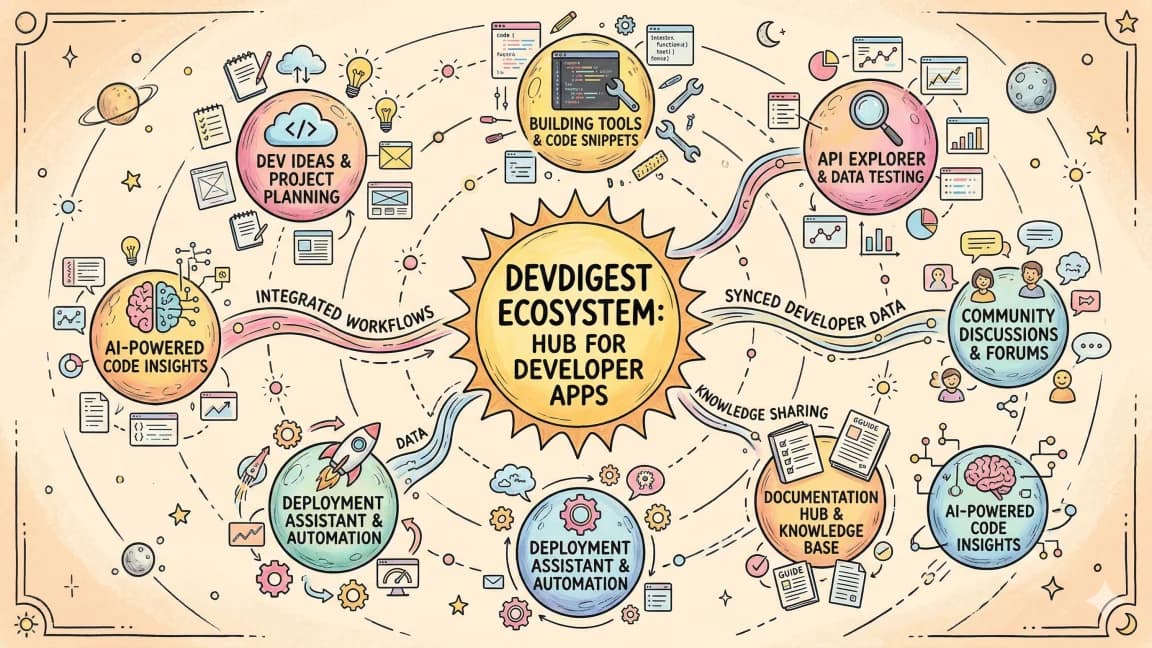
A tour of every app and tool in the Developers Digest network - from AI model comparisons to cron job scheduling.
Build with the member tools
Get Smarter About AI Dev
New tutorials, open-source projects, and deep dives on coding agents - delivered weekly.
One email per weekReal code, not theoryFree forever