Claude Code
Delegation Pattern
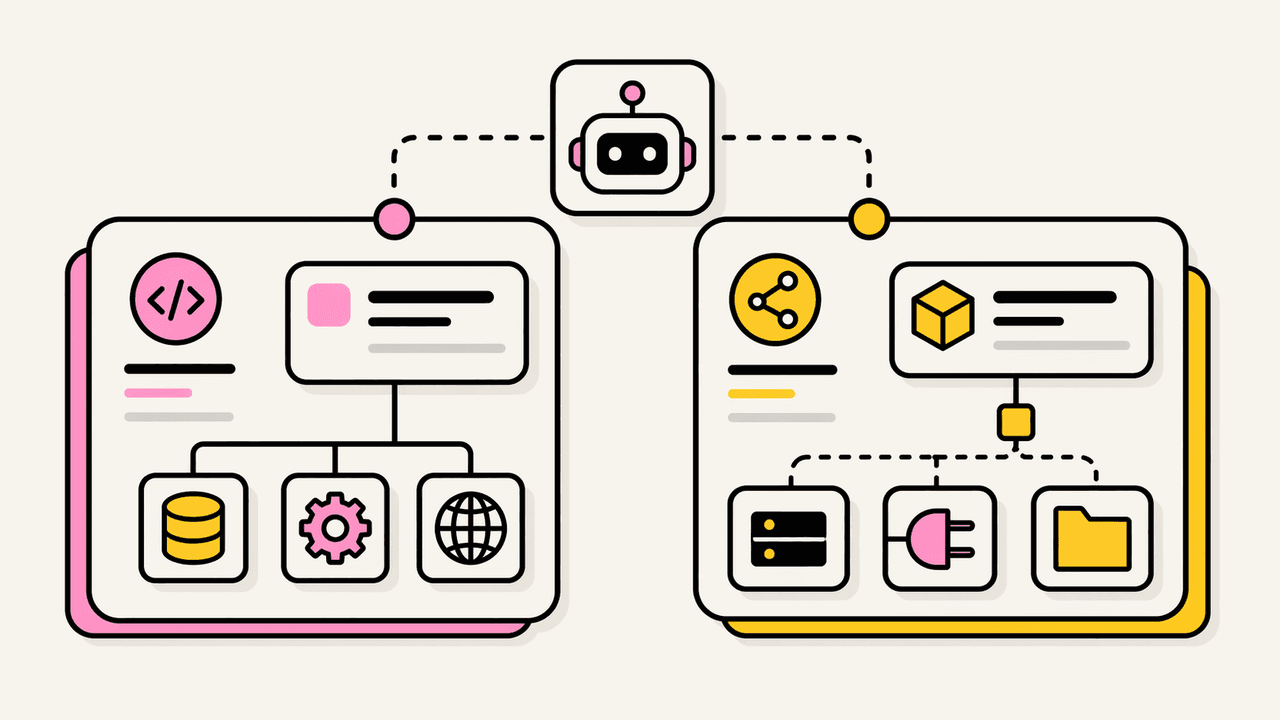
A multi-agent architecture where a manager agent breaks a task into sub-tasks and assigns each one to a specialized worker agent.
In depth
A multi-agent architecture where a manager agent breaks a task into sub-tasks and assigns each one to a specialized worker agent. The manager coordinates results and handles failures. This pattern is used in Claude Code's sub-agent system (via the Task tool), CrewAI's hierarchical process, and LangGraph's orchestrator nodes. It is the most common way to parallelize agent work.
Example
In practice, developers reach for Delegation Pattern when they need the capability described above as part of an AI feature or workflow.
Go deeper at Developers Digest
Hands-on guides, comparisons, and tutorials that cover Claude Code.
FAQ
Common questions
What is Delegation Pattern?
A multi-agent architecture where a manager agent breaks a task into sub-tasks and assigns each one to a specialized worker agent.
Why does Delegation Pattern matter for AI developers?
Delegation Pattern sits in the Claude Code part of the AI stack. Understanding it helps you make better decisions when building, debugging, and shipping AI features.
Where can I learn more about Delegation Pattern?
Developers Digest publishes tutorials and videos that cover Claude Code topics including Delegation Pattern. Check the blog and YouTube channel for hands-on walkthroughs.
Related
Related terms
Claude Code
Orchestrator-Worker Pattern
A multi-agent architecture where a central orchestrator agent receives a task, decomposes it into sub-tasks, assigns each to a specialized worker agent, monitors progress, and synthesizes results.
Claude Code
Fan-Out/Fan-In
An agent orchestration pattern where a coordinator splits work into parallel sub-tasks (fan-out), distributes them to multiple agents, waits for all results, and then combines them into a single output (fan-in).
Claude Code
Credit Metering
Billing model usage against a pool of consumable credits so that programmatic and interactive work draw from separate budgets.
Put this concept to work
Get Smarter About AI Dev
New tutorials, open-source projects, and deep dives on coding agents - delivered weekly.
One email per weekReal code, not theoryFree forever