Ruflo Is an Agent Meta-Harness. Treat the Star Count as a Warning Label.
TL;DR
Ruflo turns Claude Code and Codex into a larger agent harness with plugins, memory, swarms, MCP tools, and federation. The useful question is not the star count. It is how much harness you actually need.
Last updated: June 24, 2026
The Trend Was Real. The Harness Got Bigger.
The first version of this post covered ruvnet/ruflo as a fast-rising GitHub Trending project. The stale part was the number. The useful part was the category.
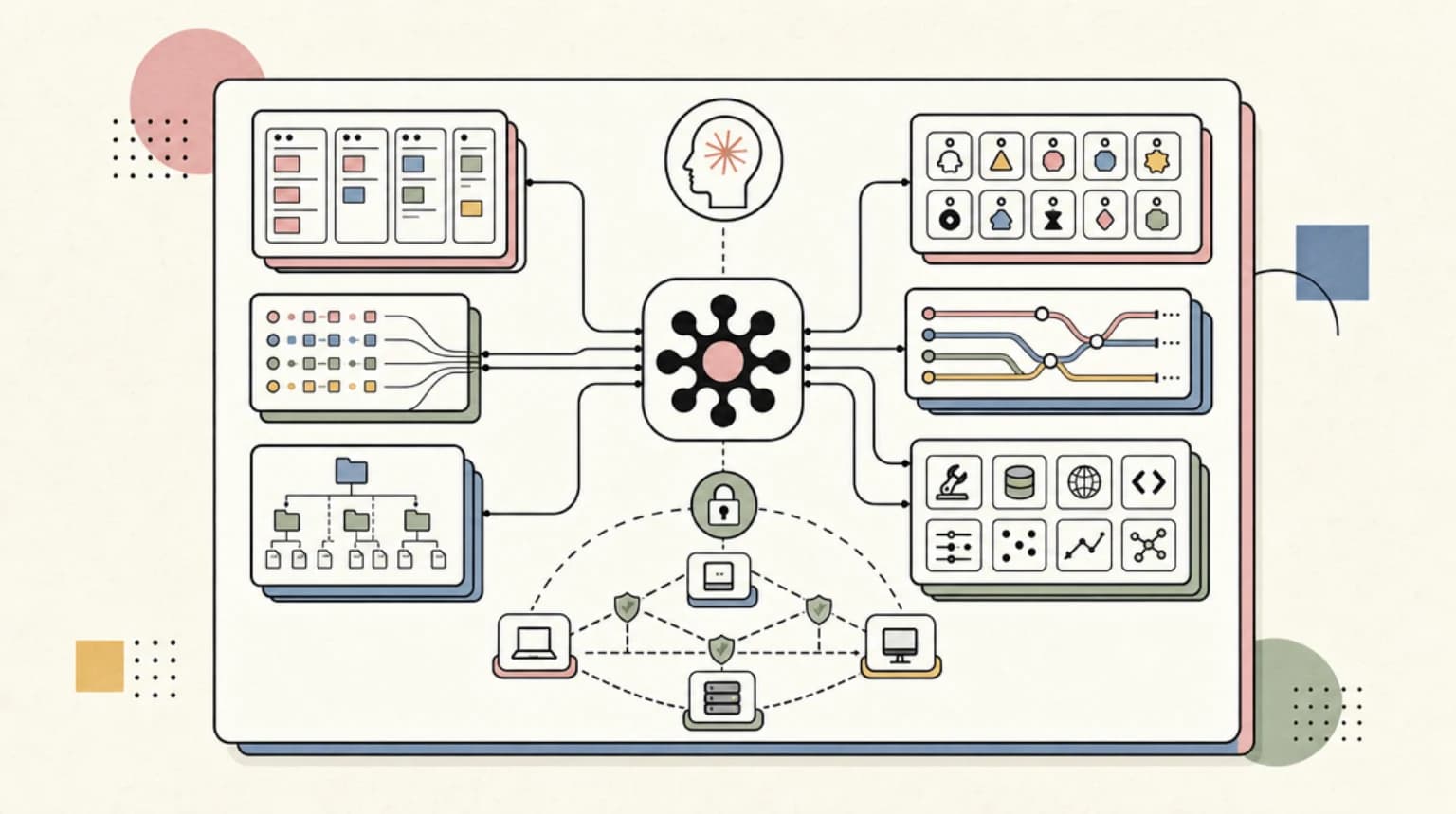
Ruflo is not just another prompt pack. Its README now describes it as an agent meta-harness for Claude Code and Codex: the execution layer around a model that adds tools, memory, loops, plugins, swarms, federation, and controls. That is the right framing. The model writes; the harness decides what the model can remember, call, repeat, coordinate, and verify.
As of this refresh, the public GitHub API shows ruvnet/ruflo at roughly 61k stars, 7.1k forks, MIT licensed, TypeScript-first, and pushed on June 24, 2026. The latest GitHub release is v3.14.1, published June 23, 2026. The npm package ruflo is also at 3.14.1.
That makes the old daily trending posts a bad canonical surface. The durable question is not whether Ruflo added thousands of stars in a week. It is whether your agent workflow needs a harness this large.
This connects directly to agent swarms needing receipts, long-running agents needing harnesses, Claude Code subagents, and agent workspaces needing filesystem contracts. Once agents move past one terminal session, orchestration becomes infrastructure.
What Ruflo Actually Adds
Ruflo's README separates two install paths, and that split matters.
The light path is Claude Code plugins. You add the marketplace, install ruflo-core, ruflo-swarm, or other plugins, and get slash commands plus agent definitions. The README is explicit that this does not register the Ruflo MCP server, so tools like memory_store, swarm_init, and agent_spawn are not callable from Claude through that path.
The full path is npx ruflo@latest init wizard or a global install. That creates the broader loop: .claude/ files, .claude-flow/, settings, helpers, hooks, MCP server, daemon, around 98 agents, 60+ commands, and 30 skills.
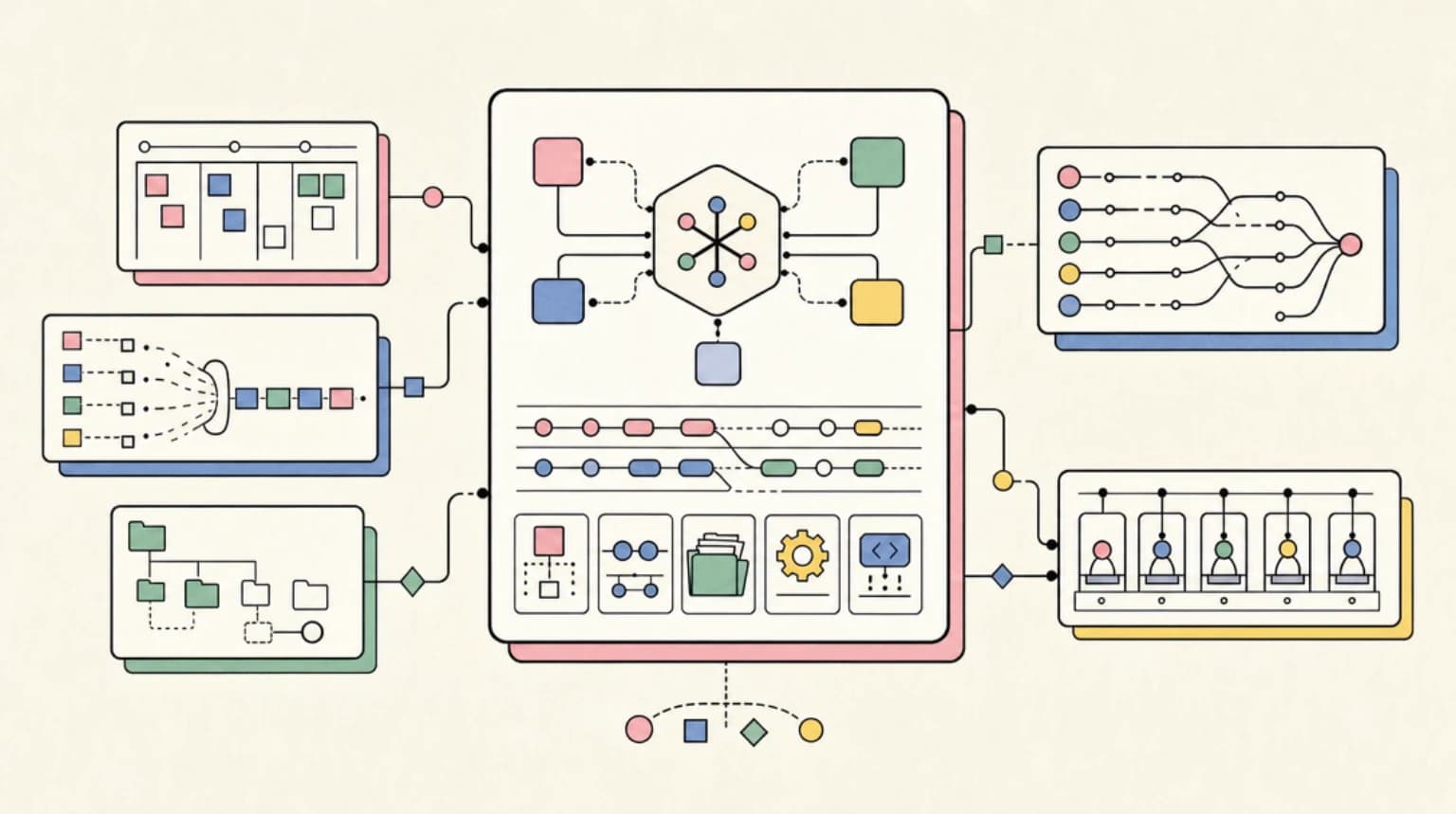
The current README highlights the main layers:
- 100+ specialized agents for coding, testing, security, docs, and architecture
- swarm coordination across hierarchical, mesh, and adaptive topologies
- vector memory through AgentDB and HNSW indexing
- SONA and ReasoningBank style learning from previous trajectories
- around 35 Claude Code plugins plus npm plugins
- MCP server mode with a large tool surface
- cross-machine federation for agents that need to collaborate securely
- security controls including AIDefence, validation, CVE remediation, and path traversal prevention
- hosted demos at
flo.ruv.ioandgoal.ruv.io
The most important correction since the old posts: the README now gives more modest vector-memory benchmark language. It cites roughly 1.9x faster retrieval at N=20k and around 3.2x to 4.7x at N=5k versus brute force, with recall near 0.99. That is much more actionable than the older extreme speedup claim repeated in the May snapshots.
Newsletter
Get the weekly deep dive
Tutorials on Claude Code, AI agents, and dev tools, delivered free every week.
From the archive
Claude Managed Agents Are Starting to Look Like Backend Jobs
May 9, 2026 • 9 min read
Agent-Native Backends Are the Next AI Coding Bottleneck
May 8, 2026 • 8 min read
6 Launches in One Day: The DD Empire Expansion
May 7, 2026 • 6 min read
DevDigest OS: The Thesis Behind Treating an Empire as One Operating System
May 7, 2026 • 9 min read
The Useful Pattern
Ruflo is interesting because it makes the harness explicit.
A single coding agent can run tools in a loop. A harness decides how that loop is structured, what gets persisted, which specialist receives a task, whether a background worker should fire, what a failed step means, and how much evidence must come back before a task is called done.
That is why Ruflo belongs in the same conversation as managed agents versus LangGraph versus DIY, Omnigent as a meta-harness, and agent evals needing baseline receipts. These systems are not competing only on model quality. They are competing on control-loop shape.
The strongest Ruflo idea is not "100 agents." It is that teams need a repeatable layer between the model and the work:
- route the task
- isolate the workspace
- choose the agent or plugin
- persist useful memory
- run checks
- capture receipts
- decide whether to continue, retry, hand off, or stop
Without that layer, multi-agent work turns into orchestration theater: many agents, many logs, weak proof.
Install Path Matters
The old posts treated the plugin and CLI paths as roughly interchangeable. They are not.
For a low-risk evaluation, the Claude Code plugin path is the right first step:
/plugin marketplace add ruvnet/ruflo
/plugin install ruflo-core@ruflo
/plugin install ruflo-swarm@ruflo
That path gives you a taste of the command surface without writing a full Ruflo project structure into the repo.
For the full loop, the README points to:
npx ruflo@latest init wizard
and MCP registration:
claude mcp add ruflo -- npx ruflo@latest mcp start
That is the path to evaluate if you actually want MCP tools, hooks, daemon behavior, and persistent project setup. It is also the path that deserves more review before running in a sensitive repository.
Who Should Try It
Ruflo is a fit if you already know what problem you are trying to solve.
It makes sense for teams running repeated Claude Code or Codex workflows that need memory, background checks, cost tracking, test generation, plugin routing, and agent-to-agent coordination. It also makes sense for builders who want a reference architecture for what a full agent harness might look like.
It is less compelling if your current bottleneck is still basic coding-agent usage. If you are not yet using Claude Code permissions, worktrees, subagents, and review receipts, Ruflo may add more surface area before you have the operational habits to use it well.
The hosted demos are useful for orientation. flo.ruv.io shows the web UI and parallel tool-calling shape. goal.ruv.io shows the goal-planning surface. Treat them as product demos, not proof that the harness fits your repo.
The Opposing View
The case against Ruflo is straightforward: it is a lot.
The README advertises dozens of plugins, many agents, hosted demos, MCP tools, web UI, federation, local LLM routing, memory, learning, telemetry-like dashboards, and security controls. That breadth is impressive, but it also expands the audit surface.
A small team may get more value by combining boring primitives:
- a tight
CLAUDE.md - a few project-local skills
- git worktrees
- a task log
- tests and browser checks
- one or two subagents
- a final receipt template
That lighter stack is easier to reason about. It is also easier to delete.
Ruflo's open issue count is high, the npm metadata still points at ruvnet/claude-flow, and the README contains a lot of fast-moving ecosystem claims. None of that means the project is bad. It means production teams should test the exact path they plan to use, pin versions, inspect generated files, and keep the first deployment small.
The Take
Ruflo is worth studying because it shows where agent infrastructure is going: not just better models, but larger harnesses around models.
The right adoption path is incremental. Start with the plugin path. Inspect the generated commands. Run one non-critical workflow. If the routing, memory, or plugin layer earns its keep, then evaluate the full CLI/MCP install in a sandbox repo.
Do not install a 100-agent harness because a star chart went vertical.
Install it only if your current workflow has a harness-shaped hole.
FAQ
What is Ruflo?
Ruflo is an open-source agent meta-harness for Claude Code and Codex. It adds plugins, agents, swarms, memory, MCP tools, hooks, federation, and security controls around the model-driven coding loop.
Is Ruflo the same as Claude Flow?
The README says Claude Flow became Ruflo. Some ecosystem metadata still points at ruvnet/claude-flow, so teams should expect transitional naming in package and repository references.
Should I use the Claude Code plugin path or the CLI path?
Use the plugin path for a low-risk trial. Use the CLI path only when you want the full loop: project files, hooks, MCP server, daemon, commands, skills, and persistent agent memory.
Does Ruflo register MCP tools through the plugin path?
No. The README says the plugin path adds slash commands and agent definitions only. The full CLI path is required for the Ruflo MCP server and tools such as memory_store or swarm_init.
What is the main risk?
The main risk is audit surface. A full agent harness can add many commands, hooks, plugins, generated files, and persistent behaviors. Pin versions, inspect generated files, and test in a sandbox before using it in a sensitive repository.
What should I compare Ruflo against?
Compare it against a lighter local harness made from Claude Code, worktrees, subagents, skills, hooks, tests, and final receipts. Also compare it against managed-agent platforms or graph runtimes if you need durable production orchestration.
Sources
Read next
Agent Workspaces Need Filesystem Contracts
GitHub's latest agent workspace trend points at a boring but important primitive: agents need explicit filesystem contracts before they get more tools.
8 min readThe Model, IDE, CLI, and Agent Framework Changes That Actually Matter
The AI coding market is noisy. The changes that matter are easier to spot when you separate model capability, editor loops, terminal agents, background agents, agent frameworks, UI layers, context, security, and cost.
10 min readAgentMemory Is Useful Only If You Audit What It Remembers
AgentMemory gives Claude Code, Codex, Cursor, and other agents persistent local memory. The real adoption question is not recall accuracy. It is whether your team can inspect, prune, and govern what gets remembered.
8 min readShare
Suggest an editSave
Developers Digest
Technical content at the intersection of AI and development. Building with AI agents, Claude Code, and modern dev tools - then showing you exactly how it works.
300+ videos30K+ GitHub stars50+ articles
Related Tools
ProductivityNew
A
AgentCanvas
A hosted infinite canvas your headless AI agents drive over MCP. Any MCP-speaking agent - Claude Code, Codex, Cursor, or...
View ToolAI Coding

Conductor
Mac app for running parallel Claude Code, Codex, and Cursor agents in isolated workspaces. Watch every agent work at onc...
View ToolInfrastructureOpen source

E2B
Open-source cloud sandboxes for AI agents. Isolated environments that start in under 200ms, run code in Python, JavaScri...
View ToolAI CodingDaily Driver
Claude Code
Anthropic's agentic coding CLI. Runs in your terminal, edits files autonomously, spawns sub-agents, and maintains memory...
View ToolApps from Developers Digest
Developer Tools
Agent Hub
Every coding agent in one window. Stop alt-tabbing between Claude, Codex, and Cursor.
View AppSaaS Products
Overnight Agents
Spec out AI agents, run them overnight, wake up to a verified GitHub repo.
View AppDeveloper ToolsIn Progress
Skill Builder
Turn a one-liner into a working Claude Code skill. From idea to installed in a minute.
View AppRelated Guides
Guide
Writing Your First Claude Code Skill
A practical walk-through of how to design, write, and ship a Claude Code skill - from choosing when to trigger, through allowed-tools, to the steps the agent will actually follow.
Getting StartedGuide
SubagentStart and SubagentStop Hooks - Claude Code
Fire when subagents spawn and finish.
Claude CodeGuide
Claude Code Setup Guide
Configure Claude Code for maximum productivity -- CLAUDE.md, sub-agents, MCP servers, and autonomous workflows.
AI AgentsRelated Videos
Zed: The Open Source Agentic IDE - Use Claude Code, Codex & Gemini CLI in one place
Check out Zed here! https://zed.dev In this video, we dive into Zed, a robust open source code editor that has recently introduced the Agent Client Protocol. This new open standard allows...
Video·
Self Improving Applications with Claude Code & Codex
Build a Self‑Improving Next.js App: Supabase + Vercel Eve + GitHub Issues + Agent Loops Check out Supabase: https://supabase.plug.dev/1wWOTGS The video demonstrates how to build and deploy a self-im...
Video·

Buzz: Open-Source Collaboration for Humans + AI Agents
Buzz by Block: Open-Source Slack-Style Collaboration for Humans + AI Agents (Demo & Setup) Check out Arcade: https://arcade.dev.plug.dev/xiDRwlA Repo: https://github.com/block/buzz The video introd...
Video·
Related Posts

8 min read
AI Agents
Agent Workspaces Need Filesystem Contracts
GitHub's latest agent workspace trend points at a boring but important primitive: agents need explicit filesystem contra...
6 min read
AgentCanvas
AgentCanvas is a visual adapter for Claude Code and Codex
Claude Code and Codex both ship great agents and terrible transcripts. AgentCanvas is a visual adapter that puts the art...
8 min read
AI Agents
Agent Workflows as Code: Why State Machines Beat Prompt Checklists
Aharness, LangChain's custom harness pattern, and OpenAI's code-first migration all point to the same next step: agent p...
7 min read
AI Agents
OpenMontage Shows the Real Future of AI Video: Agents, Not Editors
OpenMontage is trending because it treats video production like a repo-shaped agent workflow: scripts, assets, render pi...
16 min read
Loop Engineering
The Definitive Guide to Loop Engineering in Claude Code and Codex
Goal, loop, routine. Three verbs, two tools, one hard part. A complete field guide to running agentic loops in Claude Co...
10 min read
AI Coding
The Model, IDE, CLI, and Agent Framework Changes That Actually Matter
The AI coding market is noisy. The changes that matter are easier to spot when you separate model capability, editor loo...
Build with the member tools
Get Smarter About AI Dev
New tutorials, open-source projects, and deep dives on coding agents - delivered weekly.
One email per weekReal code, not theoryFree forever