NVIDIA Nemotron Nano 9B V2: Local AI That Punches Up
Prefer video? Watch the full tutorial with code walkthroughs.
Watch VideoTL;DR
NVIDIA's Nemotron Nano 9B V2 delivers something rare: a small language model that doesn't trade capability for speed. This 9B parameter model outperforms Qwen 3B across instruction following, math,...
| Official Sources | |
|---|---|
| NVIDIA Nemotron Models | Official Nemotron model overview and developer access |
| HuggingFace Nemotron Nano 9B V2 | Model weights and deployment documentation |
| NeMo Pre-training Dataset V1 | Open pre-training data on HuggingFace |
| NVIDIA Build Platform | Test Nemotron models directly in browser |
| Mamba Architecture Paper | State space model architecture reference |
| NVIDIA Technical Blog | Architecture deep dives and benchmarks |
The Hybrid Architecture That Changes the Game
NVIDIA's Nemotron Nano 9B V2 delivers something rare: a small language model that doesn't trade capability for speed. This 9B parameter model outperforms Qwen 3B across instruction following, math, science, coding, and tool use - while delivering up to 6.3x faster throughput.
For model-selection context, compare this with Claude vs GPT for Coding: Which Model Writes Better TypeScript? and OpenAI vs Anthropic in 2026 - Models, Tools, and Developer Experience; the useful question is not only benchmark quality, but where the model fits in a real developer workflow.
The secret is a hybrid architecture combining Mamba 2 with transformer layers. Four attention layers handle the heavy reasoning lifting, while MLP layers and the Mamba state space model handle everything else. You get transformer accuracy with Mamba speed.
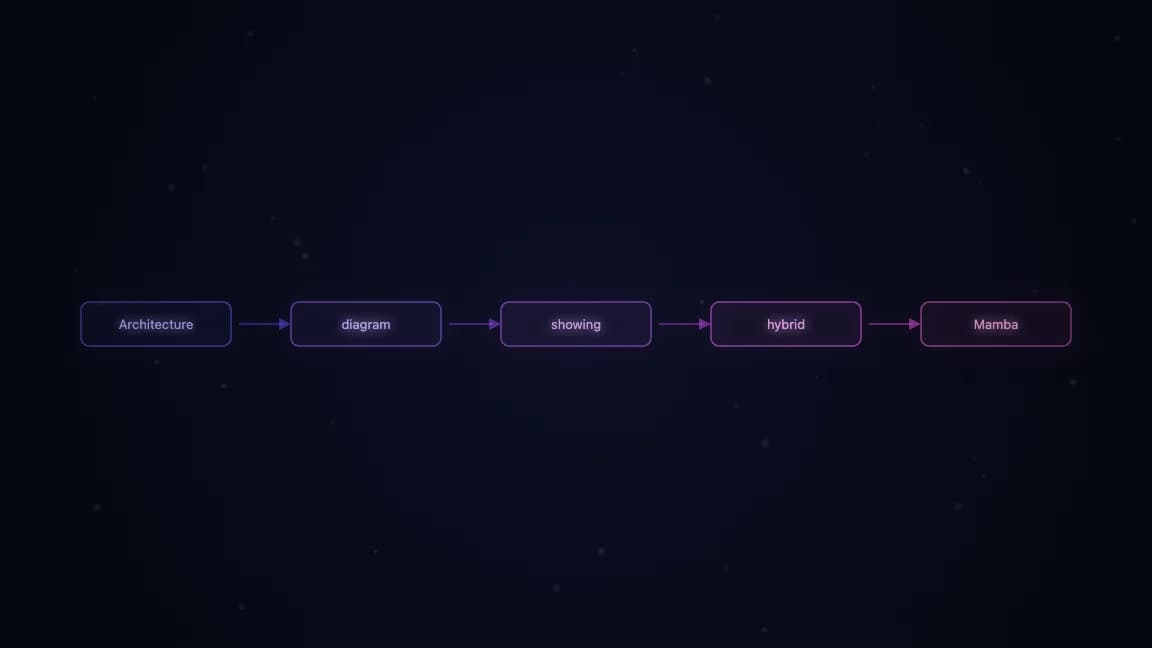
At 9B parameters, this model lands in a sweet spot. It runs on consumer hardware - your gaming GPU can handle it. The edge deployment story actually works here.
Open Data, Open Weights
NVIDIA released more than just model weights. The NeMo pre-training dataset V1 is available on HuggingFace, giving you the foundation data if you want to build derivatives. The model itself is on HuggingFace with a permissive license, or you can test it immediately on build.nvidia.com.
Training leveraged Megatron LM and NeMo for reinforcement learning. The model supports six languages: English, German, Spanish, French, Italian, and Japanese - improved through cross-pollination with the Qwen ecosystem.
Reasoning on Your Terms
Most reasoning models force you into their pace. Nemotron Nano gives you control through system prompts. Tag hard questions with /think to engage full reasoning, or use /no_think for instant responses on simple queries.
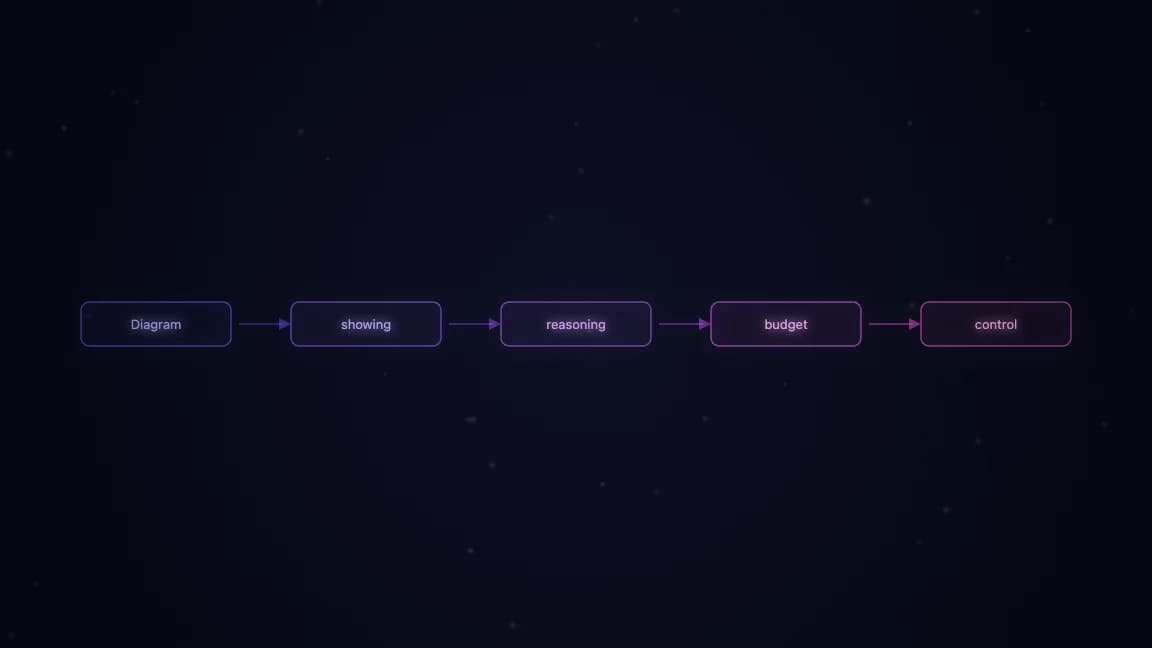
The reasoning budget goes deeper. During inference, you can set minimum thinking tokens. Dial it up for AIME 2025 problems - where the model shows dramatic gains - or down for straightforward tasks. The correlation is clear: more thinking tokens yield better results, particularly on MATH-500 where accuracy reaches the mid-90s with sufficient budget.
Newsletter
Get the weekly deep dive
Tutorials on Claude Code, AI agents, and dev tools, delivered free every week.
From the archive
Data Evolution Across Training
The technical report reveals how NVIDIA evolved their data mixture across three training phases. Phase one was code-heavy with crawled content and academic material. By phase three, the composition shifted dramatically toward STEM, with code and crawled content reduced significantly. This deliberate progression from broad to specialized data likely contributes to the model's strong reasoning performance.

Real-World Performance
Testing on build.nvidia.com demonstrates both speed and capability. The classic "how many Rs in strawberry" problem - one that tripped up many larger models - gets solved in under a second with full reasoning shown: the model breaks down letter positions, counts occurrences, and returns the correct answer of three.
Tool use works seamlessly. Ask for Harry Potter facts, and the model identifies the need for the character description tool, invokes it with correct arguments, processes the response, and formats five coherent facts. The reasoning trace shows active reflection: "this is actually six points... let me check them more carefully."
With reasoning disabled, ten paragraphs on Mamba architecture generate almost instantly. The model adapts to the constraint rather than forcing unnecessary computation.
The Complete Package
Nemotron Nano 9B V2 combines:
- Speed: 6.3x faster inference than comparable models
- Control: Toggle reasoning on/off, set thinking budgets
- Tools: Native function calling integrated with reasoning
- Transparency: Open weights, open pre-training data
- Accessibility: Runs on consumer GPUs
NVIDIA continues to strengthen both sides of the AI equation - hardware dominance plus increasingly capable open-source models. The Nemotron Nano 9B V2 proves you don't need massive parameter counts for serious performance. You need the right architecture and training approach.
FAQ
What is Nemotron Nano 9B V2?
Nemotron Nano 9B V2 is NVIDIA's 9B parameter small language model that uses a hybrid architecture combining Mamba 2 state-space layers with four transformer attention layers. This design delivers up to 6.3x faster inference than comparable models while maintaining strong performance on instruction following, math, science, coding, and tool use benchmarks. The model runs on consumer GPUs and supports edge deployment.
How does the Mamba hybrid architecture work?
The architecture blends Mamba 2 state-space layers with four transformer attention layers. The transformer layers handle reasoning-heavy computation while Mamba layers and MLPs handle everything else. Mamba provides linear scaling with sequence length rather than quadratic, giving you transformer-level accuracy with significantly faster throughput. This hybrid approach is what enables the 6.3x speed improvement.
What languages does Nemotron Nano 9B V2 support?
The model supports six languages: English, German, Spanish, French, Italian, and Japanese. Language capabilities were improved through cross-pollination with the Qwen ecosystem during training.
How do I control reasoning in Nemotron Nano 9B V2?
You can toggle reasoning using system prompt tags. Use /think to engage full reasoning mode for complex problems, or /no_think for instant responses on simple queries. During inference, you can also set minimum thinking tokens as a reasoning budget - more thinking tokens yield better results on hard problems like MATH-500 and AIME 2025, while fewer tokens work fine for straightforward tasks.
Is Nemotron Nano 9B V2 open source?
Yes. NVIDIA released the model with a permissive license on HuggingFace. Beyond the weights, they also released the NeMo pre-training dataset V1, giving developers the foundation data for building derivatives. Training used Megatron LM and NeMo for reinforcement learning.
What hardware does Nemotron Nano 9B V2 require?
At 9B parameters, the model runs on consumer hardware including gaming GPUs. This makes it practical for edge deployment and local development without requiring datacenter infrastructure. You can also test the model immediately on build.nvidia.com without any local setup.
How does Nemotron Nano 9B V2 compare to Qwen 3B?
Nemotron Nano 9B V2 outperforms Qwen 3B across instruction following, math, science, coding, and tool use benchmarks while delivering up to 6.3x faster throughput. The key advantage is the hybrid Mamba architecture - you get better quality at higher speed than smaller dense models.
Does Nemotron Nano 9B V2 support tool use?
Yes. The model has native function calling integrated with its reasoning system. When you ask questions requiring external data, it identifies the need for tools, invokes them with correct arguments, processes responses, and formats the output. The reasoning trace shows active reflection during tool use, improving accuracy.
Watch the Video
Read next
NVIDIA's Nemotron 3 Super in 6 Minutes
NVIDIA's Nemotron 3 Super combines latent mixture of experts with hybrid Mamba architecture - 120B total parameters, 12B active per token, 1M context, and up to 4x more experts at the same cost.
5 min readNVIDIA Nemotron Nano 2 VL: Open Source Vision-Language Model
NVIDIA's Nemotron Nano 2 VL delivers vision-language capabilities at a fraction of the computational cost. This 12-billion-parameter open-source model processes videos, analyzes documents, and reas...
5 min readDeepSeek R1 and V3: The Developer's Guide to Open-Source AI
DeepSeek's R1 and V3 models deliver frontier-level performance under an MIT license. Here's how to use them through the API, run them locally with Ollama, and decide when they beat closed-source alternatives.
9 min readShare
Suggest an editSave
Developers Digest
Technical content at the intersection of AI and development. Building with AI agents, Claude Code, and modern dev tools - then showing you exactly how it works.
300+ videos30K+ GitHub stars50+ articles
Related Tools
Local AI

Jan
Open-source ChatGPT alternative that runs 100% offline. Desktop app with local models, cloud API connections, custom ass...
View ToolLocal AI
Ollama
The easiest way to run LLMs locally. One command to pull and run any model. OpenAI-compatible API. 52M+ monthly download...
View ToolLocal AI
LM Studio
Desktop app for discovering, downloading, and running local LLMs. Clean chat UI, OpenAI-compatible API server, and autom...
View ToolLocal AI

GPT4All
Private local AI chatbot by Nomic. 250K+ monthly users, 65K GitHub stars. LocalDocs feature lets you chat with your own...
View ToolRelated Guides
Guide
Run AI Models Locally with Ollama and LM Studio
Install Ollama and LM Studio, pull your first model, and run AI locally for coding, chat, and automation - with zero cloud dependency.
Getting StartedGuide
Migrating from Cursor to Claude Code
A concrete step-by-step guide to moving your development workflow from Cursor to Claude Code - settings, rules, keybindings, and the habits that transfer.
Getting StartedGuide
.claude/rules Directory - Claude Code
Path-specific rules that only load for matching files.
Claude CodeRelated Videos
NVIDIA's NEW Open Source Nemotron Nano 2 VL Model in 5 Minutes
NVIDIA just released Nemotron Nano 2 VL - an open-source vision language model that's 4x more efficient than previous models. In this video, I break down what makes this 12-billion parameter...
Video·
NVIDIA's Llama Nemotron Nano 8B Vision Language Model
Check out NVIDIA's Llama Nemotron Nano 8B Vision Language Model here; https://nvda.ws/3HApYJ6 Exploring NVIDIA's Llama Nemotron Nano Vision Language Model: Benchmarks and Use Cases In this...
Video·
NVIDIA's NEW Nemotron 3 Super in 6 Minutes
NVIDIA Nemotron 3 Super: Latent MoE + Hybrid Mamba, 1M Context, Faster Inference NVIDIA released Nemotron 3 Super, a new mixture-of-experts model with a new architecture combining latent mixture of e
Video·
Related Posts
5 min read
NVIDIA
NVIDIA's Nemotron 3 Super in 6 Minutes
NVIDIA's Nemotron 3 Super combines latent mixture of experts with hybrid Mamba architecture - 120B total parameters, 12B...

5 min read
NVIDIA
NVIDIA Nemotron Nano 2 VL: Open Source Vision-Language Model
NVIDIA's Nemotron Nano 2 VL delivers vision-language capabilities at a fraction of the computational cost. This 12-billi...
9 min read
DeepSeek
DeepSeek R1 and V3: The Developer's Guide to Open-Source AI
DeepSeek's R1 and V3 models deliver frontier-level performance under an MIT license. Here's how to use them through the...
10 min read
Llama
Llama 4: The Complete Developer's Guide to Meta's Open Source Models
Meta's Llama 4 family brings mixture-of-experts to open source with Scout and Maverick. Here's how to run them locally,...
9 min read
Microsoft
Microsoft PHI-4: A 14B Parameter Model That Rivals Models 5x Its Size
Microsoft's PHI-4 is an MIT-licensed 14 billion parameter model that matches Llama 3.3 70B and Qwen 2.5 72B on key bench...

8 min read
Qwen
Qwen3.6-27B Is the Local Coding Model to Test First
Qwen3.6-27B keeps pulling developers back because it sits in the awkward, useful middle: strong enough for real local co...
Build with the member tools
Get Smarter About AI Dev
New tutorials, open-source projects, and deep dives on coding agents - delivered weekly.
One email per weekReal code, not theoryFree forever